

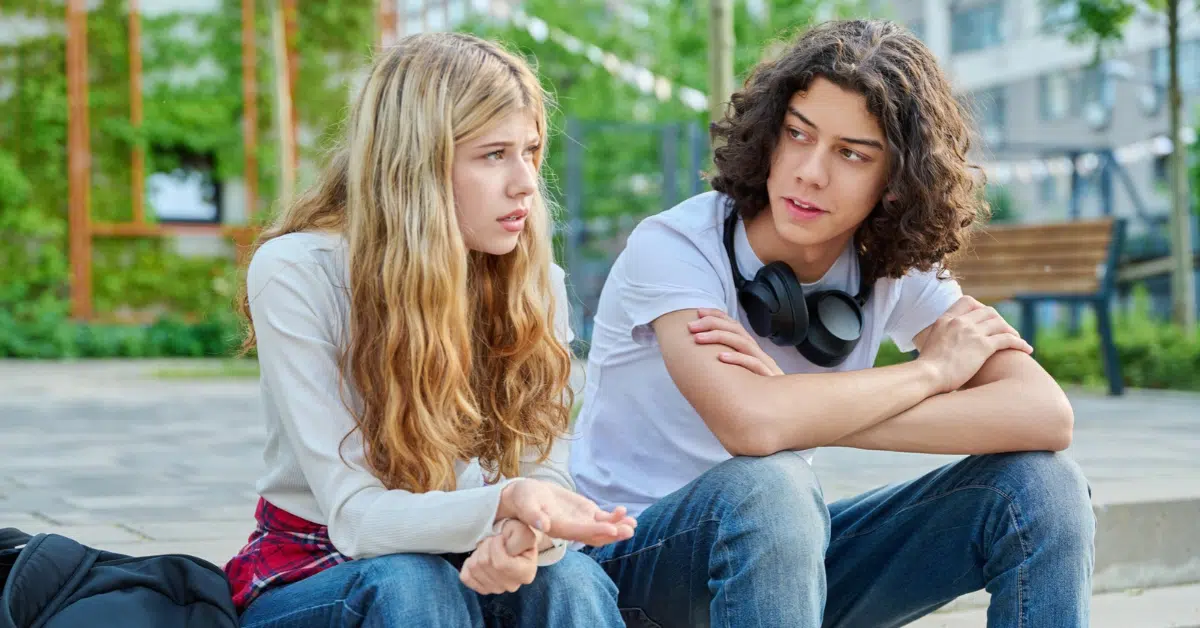
Friendship breakups are rarely talked about, but they can be some of the most painful relationship losses you’ll experience. If you’ve ever lost a close friend, you know how confusing and heavy it can feel. Unlike romantic breakups, friendship breakups don’t always come with a clear conversation or explanation. One day everything seems normal, and the next day the connection is gone or distant.
Friendships often fade over time, and this is normal as two people get older and go their separate ways. But a friendship breakup can leave you grieving, confused, or angry.
If you or your child is navigating an experience like this, it can be hard to cope. Understanding why these relationship ruptures happen and how to navigate them can help with processing the loss and moving forward in a healthy way.
What You’ll Learn
- Why can friendship breakups hurt so much?
- What are some common reasons friendships grow apart?
- When might it be healthy to repair a friendship, set boundaries, or walk away?
- How can parents support a teen who is struggling with the loss of a friendship?
Quick Read
Friendship breakups can be deeply painful, especially for teens and young adults, who often rely on friendships for emotional support, companionship, and belonging. Losing a friendship can bring grief, loneliness, confusion, anger, and self-doubt, particularly when the relationship ends without explanation. Friendships may end because of changing values, unresolved conflict, broken trust, romantic involvement, life transitions, difficult experiences, or changing needs.
Coping with the loss can involve allowing yourself to grieve, reflecting without self-blame, accepting that people and relationships change, focusing on what you can control, and nurturing supportive relationships. When ending a friendship, clear communication, healthy boundaries, and making space for mixed emotions can help. Parents can support teens by listening, validating their feelings, and recognizing when a friendship breakup may be affecting their mental health.
The Pain of Friendship Breakups
Friends often serve as a primary source of emotional support and companionship, especially during adolescence and young adulthood. High-quality friendships during these stages are linked to greater emotional well-being, better adjustment at school or work, and a stronger sense of belonging.
Losing that connection often means losing part of your social safety net and may create feelings of shame or low self-worth, and potentially lead to trust issues in future relationships.
One of the most painful aspects of a friendship breakup is how suddenly it can happen. Romantic partnerships can occur suddenly too, of course, but people usually understand the grief that follows. With friendships, no cultural script explains why things ended. A close friend might simply disappear, distance themselves, or stop responding.
Without an explanation, it can feel like the ground shifted beneath you. This kind of loss can trigger intense confusion, loneliness, and self-doubt.
My Friend Broke Up with Me. What Did I Do Wrong?
If you’re coping with a friendship breakup, especially one that caught you by surprise, it can feel like it’s all your fault. It can cause you to question your judgment, feel ashamed, or even gaslight yourself about what happened.
You might ask yourself questions like:
- “Did I say something wrong?”
- “Did I miss a sign that something was wrong?”
- “Was the friendship never as strong as I thought?”
Why Do Friendships End?
Sometimes the answer is simply that the other person was dealing with something they didn’t or couldn’t communicate. People change, priorities shift, and life circumstances evolve. Shared memories aren’t always enough to keep a friendship alive.
This is painful, but it’s sometimes inevitable. Your role in the breakup may feel obvious to you, or like a complete mystery. If you behaved in ways you regret, you can learn from them and try to avoid those patterns in the future.
Either way, remember that experiencing a friendship breakup doesn’t mean you’re entirely, or even partially, at fault. As with romantic relationships, when close friendships dissolve, it’s often about both people involved.
7 Common Reasons For Friendship Breakups
Friendships can end for many reasons. Here are some common factors that contribute to friendship breakups.
1. Differences in values or beliefs
As people grow and develop, their values and priorities can change, and friendships fade along with those changes. Political beliefs, moral perspectives, or lived experiences can begin to clash in ways that make both people feel awkward or distant.
2. Unresolved resentment or communication problems
Small conflicts or old wounds that go unaddressed can slowly build into resentment. If communication and relationship patterns remain unhealthy, one or both friends might eventually reach a breaking point.
3. Friendship violations
Healthy friendships are built on trust and mutual respect. When someone crosses an important boundary, such as betraying a confidence or violating expectations of loyalty, it can damage the foundation of the relationship. Any violation of a core expectation of friendship, whether or not it’s been explicitly discussed or communicated, can cause someone to back away.
4. Romantic involvement or blurred boundaries
Sometimes young adult or teen friendships shift when romantic feelings or sexual involvement enters the dynamic. If those feelings aren’t mutual or create tension, the friendship can become complicated and difficult to sustain.
5. Life transitions
Major life changes can reshape friendships. Moving to a new city, building new social networks, starting college, developing different priorities, experiencing trauma or grief, or going through another major shift can all create distance between friends.
6. Difficult experiences
Major life events such as the death of a loved one, a traumatic experience, a personal crisis, or significant shifts in academic or career paths can affect someone’s mental health. These experiences may trigger depression, anxiety, or PTSD that keep someone from reaching out and maintaining or repairing a friendship. Or they can lead people to reevaluate their priorities, relationships, and life direction.
7. Differing needs in the relationship
Sometimes two people simply grow in different directions. What you need from friendship today may not be the same as what you needed several years ago. This is especially true for teens and young adults, because their identities and values can shift quickly as they mature.

When You Might Need to End a Friendship
Ending a friendship is rarely easy, but sometimes it is the healthiest choice.
You might consider ending a friendship if the relationship consistently feels unsafe, draining, or harmful to your well-being. This can include situations where there is manipulation, repeated boundary violations, chronic disrespect, or behavior that undermines your physical, mental, or emotional mental health.
At the same time, it can be helpful to pause before making a final decision. Not every conflict means a friendship must end.
If you are considering a friendship breakup, ask yourself a few questions:
- Is this a relationship that still feels meaningful and safe?
- Could a conversation help repair the hurt that occurred?
- Is this a pattern that has happened repeatedly, or a one-time conflict?
If the friendship feels worth repairing, consider talking openly with your friend about what happened. Honest communication can sometimes create an opportunity for growth and healing.
However, if the relationship no longer feels healthy or sustainable, it may be appropriate to step away. It’s okay if this choice feels like a complicated mix of relief and sadness.
Why Ghosting a Friend Can Be Harmful
When ending a friendship feels uncomfortable, some people choose to ghost instead of having a difficult conversation. Ghosting means suddenly cutting off contact without explanation. While it may seem easier in the moment, ghosting often leaves the other person confused and hurt.
If you or your child is the one ending the friendship, offering a brief explanation can provide clarity and closure. It’s not about sharing every detail or justifying your decision extensively, but acknowledging the relationship and explaining your choice to reduce unnecessary pain.
Of course, there are exceptions here. In cases of bullying, harassment, or other harmful or threatening behaviors, protecting your own or your loved one’s safety and boundaries should come first.
How to Cope When a Friend Breaks Up With You
Being on the receiving end of a friendship breakup can be deeply painful. You might feel angry, sad, confused, or numb. For teens and young adults, friendship breakups can lead to low self-esteem and wariness in new relationships.
These types of relationship ruptures can also impact your lifestyle and other friendships. For example, you might worry that other people, including mutual friends, will pick sides and stop talking to you. Or that you won’t be able to go to the places you and your friend used to go to together. These are valid concerns and are, unfortunately, not uncommon.
Friend breakups are a lot to process, and it often takes time, patience, and support to heal from them. Here are a few ways to cope with friendship breakups.
1. Allow yourself to grieve
Friendship loss is a real loss. Give yourself permission to feel your emotions without minimizing them and without judging yourself. The grieving process can include sadness, anger, confusion, numbness, withdrawal, and a feeling that you want to make space with everyone for fear of being hurt.
2. Reflect without blaming yourself
Reflecting on why the relationship ended can be helpful. Ask yourself what your role may have been and whether there are things you would approach differently in the future.
However, don’t turn reflection into self-blame. Holding onto internal (or external) resentment will likely only hurt you in the long run. Don’t force yourself to be positive when you don’t feel that way, but remember that relationships are shaped by both people’s actions and experiences.
3. Accept that people change
One of the hardest parts of friendship breakups is accepting that relationships evolve, and we can’t control it. As life changes, people change—it’s a natural part of growing, and of growing up. The person you were just a few years ago may have needed different friendships than the person you are today, and the same goes for your friends.
Accepting your past and present self, with all your mistakes and growth, can help you approach friendship loss with compassion. The choices you make are based on how you relate to the world and what you understand at that time. The same is true for everyone else and their choices.
Often, a friendship breakup is not about someone doing something wrong. It may simply reflect the fact that two people are navigating different paths.
4. Focus on what you can control
After giving yourself time to process the loss, gradually refocus your attention toward other parts of your life. Engaging in hobbies, doing creative activities, making personal goals, and leaning on your support system can help rebuild a sense of stability and optimism.
5. Invest in supportive relationships
One of the best ways to heal from a friendship breakup is to nurture new friendships that feel healthy and supportive. Spending time with people who value and respect you can remind you that meaningful friendships are still possible.

How to Cope When You Are the One Ending the Friendship
Ending a friendship can bring its own complicated emotions. Even if the decision feels necessary, you might still experience guilt, sadness, or doubt.
It can help to remind yourself that choosing distance from a harmful relationship is sometimes an act of self-respect. If you’re initiating the friendship breakup, consider these steps:
1. Communicate clearly if possible
If it feels safe, share your decision honestly and respectfully. A clear explanation can prevent confusion and provide closure for both of you. Rather than risking a confusing or combative text exchange, consider talking on the phone, in person, recording a voice note, or in a written letter.
2. Accept mixed emotions
You might feel relief, grief, sadness, anger, or fear all at the same time. Experiencing a wide range of emotions is normal when an important relationship changes, and it doesn’t mean you did anything wrong or made a mistake in ending the friendship.
Sometimes we have to let go of people we really care about in order to maintain our own mental well-being, and there’s no easy way around that.
3. Focus on growth
Friendship breakups can offer insight into our needs, values, and boundaries. Reflecting on the experience can help you build healthier relationships in the future.
Seeking support throughout this process from trusted loved ones, friends, or a therapist can help you understand what happened and how to move forward.
Healing from a friendship breakup takes time. Just like with any other major life transition or experience of grief, it’s not a linear process, and how you or your loved one feels will likely change day to day for some time.
What to Say to a Teen Who’s Going Through a Friendship Breakup
Parents can help most by listening, validating the loss, and resisting the urge to fix the situation right away. Here are some things you might say to a teen who’s struggling with a friendship breakup:
- “I’m really sorry. Losing a friendship can hurt just as much as any other breakup.”
- “It makes sense that you’re upset. That friendship was important to you.”
- “Do you want me to listen, help you think through what to do, or just keep you company?”
- “You can tell me as much or as little as you want.”
- “What happened doesn’t determine your worth or whether you’re a good friend.”
- “It’s okay to miss someone and still recognize that the friendship wasn’t working.”
- “You don’t have to resolve everything today. Give yourself some time.”
- “How can I support you at school while this is still feeling raw?”
- “When you’re ready, we can think about people or activities that might help you feel less alone.”
- “I’m here, even if you want to talk about the same thing more than once.”
- “I love you, and you’re not going through this by yourself.”
Try to avoid minimizing comments like “You’ll make new friends,” “It’s not a big deal,” or “Forget about them.” Even if those statements are well-intended, they can make a teen feel misunderstood.
If the breakup leads to persistent withdrawal, hopelessness, major changes in sleep or eating, school avoidance, or talk of self-harm, parents should reach out to a mental health professional promptly.
How Treatment Supports Relationship Skills and Authentic Connection
Sometimes the pain of a friendship breakup cuts deep and leaves a wound that won’t close. Or the rejection a teen or young adult experiences may trigger anxiety, depression, or low self-esteem.
Therapy can help you or your loved one process complicated emotions, understand what happened in the relationship, connect with other young people in safe settings, and rebuild a sense of confidence and connection moving forward.
Our team at PrairieCare can help you or a loved one find the right mental health support by giving us a call at 952-826-8475. We’ll guide you in finding the appropriate program in our full continuum of care located in the Twin Cities, Mankato, and Rochester. Together, we’ll build a path to healing and living a fulfilling life.
Frequently Asked Questions
Why are friendship breakups so painful?
- Friendship breakups hurt because friends often serve as a primary source of emotional support, especially during young adulthood. For teens, friendships create a sense of belonging and fitting in, which is extremely important during adolescence. Losing that connection can mean losing part of their social safety net, navigating complex emotions, feeling ashamed or unworthy, and potentially developing trust issues or other attachment wounds.
How do you cope with a friendship breakup?
- Coping with a friendship breakup involves allowing yourself to grieve, reflecting on the relationship without internalizing or externalizing blame, and focusing on what you can control, like nurturing supportive relationships and engaging in activities that help you move forward.
Why do friendships end during young adulthood?
- Friendships often change during emerging adulthood because people are exploring new identities, careers, and social environments. Life transitions like moving, starting college, or shifting priorities can make it difficult to maintain the same friendships.
Is it normal to grieve a friendship breakup?
- Yes. Friendship loss can trigger grief responses similar to those experienced after romantic breakups, including sadness, anger, confusion, and loneliness.
Should you explain why you are ending a friendship?
- If it feels safe, offering a clear explanation of your decision can provide clarity and closure for both people.
Can a friendship recover before or after a breakup?
- Sometimes friendships can heal if both people are willing to communicate, address past issues, and rebuild trust. In other situations, it may be healthier for both people to move forward separately.