


Mogging is a viral trend sweeping social media spaces. It encourages people to compare themselves to others based on appearance, fitness, social status, or success. Popular among Gen Z, the term came from the internet subculture and acronym “Alpha Male of the Group,” and it’s essentially a way to puff yourself up while putting others in their place.
Getting mogged means being one-upped in some sort of unspoken or more obvious competition, like body appearance or strength. Alongside trends like looksmogging and looksmaxxing, mogging can reinforce the idea that someone’s value depends on how they look or how they measure others.
Young people often use the term with does of good-natured lightheartedness—it’s not always that serious or deep. Sometimes it’s used as trash talk or as an internet slang term. However, some people—particularly teen boys and men—are taking the concept way too far. And that can lead to a slew of mental health concerns.
What You’ll Learn
- What does “mogging” mean, and why is it trending on social media?
- How can mogging affect teen boys’ mental health?
- Why do social media algorithms make appearance comparison worse?
- What are the warning signs that mogging is affecting your teen’s well-being?
- How can parents help teens build confidence beyond appearance and social status?
Quick Read
Mogging is a viral social media word that encourages young people to compete based on appearance, strength, or status, often reducing self-worth to physical traits. Similarly, looksmogging and looksmaxxing encourage young people to constantly evaluate themselves to others based on physical appearance.
While it may seem harmless or humorous, constant comparison or “mog wars” can negatively affect teen boys’ and young men’s body image, self-esteem, and mental health, contributing to anxiety, depression, perfectionism, and unhealthy behaviors. Social media algorithms can intensify these pressures by continuously promoting appearance-focused content.
Parents can help by encouraging open conversations, modeling body neutrality, limiting harmful social media exposure, healthy self-improvement, reinforcing values beyond appearance, and seeking professional support when needed.
What Does the Slang Term ‘Mogging’ Mean?
The idea of competitive besting is nothing new. Terms like “peacocking” and being a “try-hard,” for example, refer to people (usually men) who put on a show in order to impress or attract others. Mogging is a similar concept with a different name coined by Gen Z. Beneath these behaviors sometimes lie deeper problems, like low self-confidence, learned beliefs about worth and value, and ingrained toxic masculinity culture.
Being overly competitive, especially in something that really doesn’t matter in the long run, can impair mental, emotional, and physical health for young people. Homing in on mogging directs attention and focus away from who you are as a person and toward things that are out of your control or shallow (such as bone structure).
This specific type of comparison can also influence ideas that men should dominate not just their social statuses among other men, but also in dating spaces with women. This can lead to perpetration of real harm and even abuse toward women.
Appearance-Focused Mogging: Looksmogging and Looksmaxxing
Mogging has evolved into several trends that focus on physical appearance and place greater emphasis on changing your look to make it better than others’. One of the most popular forms of mogging is looksmogging, focused on physical appearance, and looksmaxxing became the actionable part of looking a certain way.
We break down both trends and why they’re targeting body image in such a dangerous way.
- Looksmogging refers to outshining someone based on appearance. In online communities, someone may be looksmogged if another person has a sharper jawline, is taller, appears more muscular, or is more conventionally attractive.
- Looksmaxxing is the practice of trying to maximize your physical appearance. In healthy approaches, this could be getting enough sleep, practicing good hygiene, or exercising. However, some online communities promote extreme approaches like taking illegal drugs, bone smashing (deliberately injuring the jaw), obsessive body checking and more to achieve the “perfect” or better look than others.
Taking care of yourself is not inherently harmful, but when it becomes excessive or obsessive, it can be a huge red flag. When appearance becomes the primary measure of self-worth, body image and mental health challenges can quickly become a reality.
The Impact of Alpha Male Mogging on Body Image
Mogging can fuel judgment, comparison, and shame. It can also tank body image and self-esteem, especially for youth. Negative body image is a widespread issue in a culture that places so much value on physical appearance, and it can affect people of every gender. Many men struggle with dissatisfaction about their bodies, particularly around muscularity, height, weight, and facial features.
Plus, trying to be the best at something is usually a never-ending pursuit, because there will always be someone out there who is more conventionally attractive (even though attractiveness is completely subjective), more skilled, more stylish, wealthier, and a heavier bench presser.
Body image isn’t just about how someone sees themselves. It also reflects how they’re treated by others. People who don’t fit conventional beauty standards or who live in larger bodies are more likely to experience bullying, teasing, social exclusion, and discrimination. These experiences can shape self-esteem and reinforce the belief that appearance determines someone’s worth.
Looksmogging, even when framed as a joke or internet meme, taps into these insecurities. The trend essentially reduces a person’s value to their jawline, height, physique, or attractiveness. “Mogging challenges” on TikTok and other social media platforms are direct invitations to compare yourself to others, and ultimately to think of yourself as either a winner or a loser.
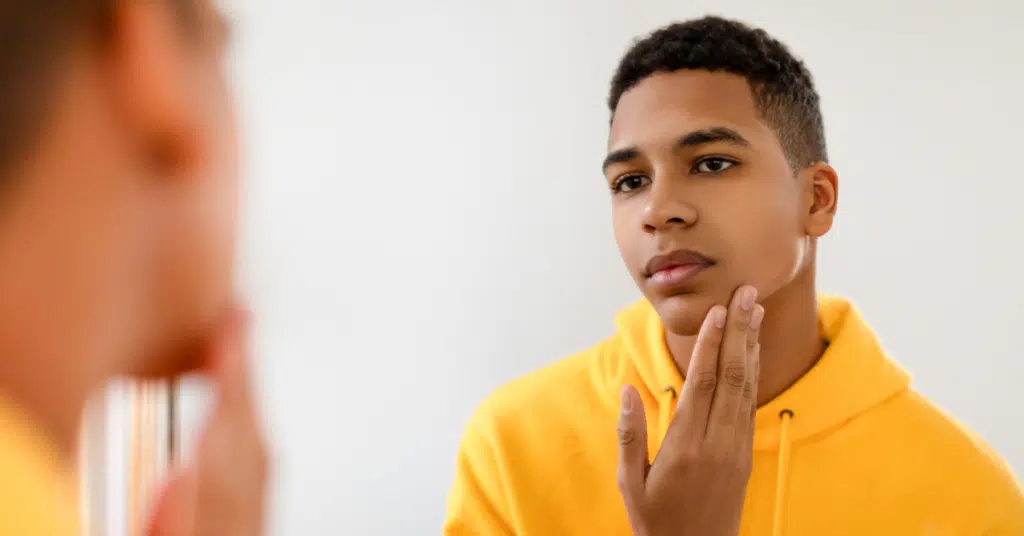
Mental Health Effects of Mogging
For someone already feeling insecure, this type of content can reinforce negative beliefs and preoccupation with perceived flaws. Pressure to pursue an unrealistic ideal. Over time, this can contribute to:
- Pressure or perfectionism around chasing unrealistic ideals
- Lower self-esteem
- Increased anxiety or depressive symptoms
- Excessive body checking or appearance-focused behaviors
- Obsessive exercise or restrictive eating habits
- Social withdrawal or avoidance of dating and social situations
Why Do People Participate in “Mog Wars” and Mogging Online?
People have always engaged in behaviors and trends that give them a status boost. Mogging online gives people a sense of control, especially for young people who feel like they have something to prove.
After all, if you’re the most attractive, coolest, and most popular person in the room (or online space), it’s easy to feel like you’ll have access to more acceptance, belonging, success, and security.
Some common reasons someone might participate in mogging online include:
- Low self-worth or confidence
- A need for respect and external validation
- Ingrained beliefs about what it means to be “a real man”
- A desire to dominate in order to feel safe
Regardless of why someone does it, people don’t engage in mogging for no reason. Mogging, like other behaviors, fills some underlying, unmet need.
How Do TikTok and Instagram Algorithms Amplify Body Comparison?
Social media algorithms often exacerbate the problem. Once you engage with appearance-focused content, you’re often shown more videos promoting “looksmaxxing,” body comparisons, cosmetic procedures, or narrow and rigid definitions of masculinity.
Something that would pop up occasionally begins to take over your whole feed. The more you’re surrounded by it, the more wrapped up you get in comparison traps.
5 Ways to Support a Teen Who’s Been Mogged
For adolescent boys and young men who are still developing their identities and sense of self, trends like mogging can set the stage for mental health issues that follow them into adulthood.
While not everyone who encounters mogging content will develop psychological challenges as a result, it does increase the risk. During a stage of life when peer approval often feels like a matter of life and death, mogging can amplify insecurity and make appearance or physical ability seem like the primary measure of confidence, popularity, and success.
Here are five ways to help your teen find more confidence and a healthier relationship with their body.
1. Model body neutrality
Body neutrality is the idea that your body isn’t the most important thing about you, and it doesn’t define your worth. It’s a more accessible way to navigate body image issues than trying to pretend they don’t exist.
Body positivity is great, too, but achieving it can feel like an unreachable goal. Try not to make body-based compliments to your teen or anyone else. And make sure you treat your own body with respect and don’t berate, belittle, or verbally judge your own or others’ bodies, especially around your teen.
2. Encourage open and vulnerable communication
Boys and men are socialized not to talk about their fears and insecurities, which makes them feel isolated and alone. So show interest in their inner worlds. Ask them open-ended questions about their experiences with their body image or confidence, and how interactions at school or online help or hurt those experiences.
Getting curious and listening helps build trust between you and your child, opening the door to healthier and more honest communication.
3. Limit screen time
Set limits on your teen’s social media usage. Research has shown over and over that too much social media leads to more distress, anxiety, and depression, especially for developing brains.

4. Help them live into their values
It can be hard to know your own values at any age, and trying to figure it out as an adolescent can be even harder. There’s so much noise influencing a teen’s choices and behaviors, and it can be tough for them to tap into their own internal compasses.
Talk with them about values that don’t have anything to do with appearance or domination, and model how to behave in accordance with those.
5. Get support
If your teen is struggling beyond your capacity to help them, getting professional support is the next right step. Therapy can give them a safe space to unpack body image issues, figure out what’s driving low self-worth, and improve well-being.
Seeking therapy early helps people learn how to challenge learned beliefs and develop resilience, skills that last far beyond adolescence.
Adolescent Mental Health Support at PrairieCare
At PrairieCare, we help people of all ages learn how to navigate negative body image, low self-esteem, comparison, and unhealthy coping approaches. We have programs that target teenage anxiety, depression, trauma, and more. All our comprehensive treatment programs address underlying causes and secondary mental health challenges.
We meet you where your child is at and offer outpatient therapy, Intensive Outpatient Program (IOP), Partial Hospitalization (PHP), residential treatment, and inpatient hospitalization. Our team of therapists, psychiatrists, nurse practitioners, and other mental health professionals provide personalized individual and group support to help you strengthen resilience and reconnect with what matters.
Reach out to speak with our caring intake team and schedule a complimentary screening at 952-826-8475. We’re here for you no matter what you’re going through.

FAQs
What does “mogging” mean and how can it affect mental health?
- Mogging refers to trying to dominate or outshine someone else, often based on physical appearance, strength, or status. When taken seriously, it can fuel unhealthy comparison, lower self-esteem, increase anxiety, and contribute to negative body image.
Is mogging harmful to mental health?
- It can be. Constant comparison and appearance-based competition may increase feelings of insecurity, perfectionism, anxiety, and depression, especially in teens and young adults who are still developing their brains and identities.
Why do people participate in mogging online?
- Many people engage in mogging to seek validation, boost social status, or cope with low self-esteem. Social media can reward these behaviors with attention and engagement, which inevitably reinforces the cycle of comparison.
How do TikTok and Instagram algorithms amplify body comparison through mogging content?
- Social media algorithms recommend more of the content you interact with. If you engage with mogging, you’ll get a heavier stream of videos about looks, fitness, and “looksmaxxing,” making unrealistic standards seem normal.
What is the psychological impact of mogging on male body image and self-esteem?
- Mogging can reinforce the belief that a man’s worth depends on his appearance or physical dominance. Over time, this can contribute to body dissatisfaction, low confidence, anxiety, abusive behavior toward women or other men, and unhealthy behaviors like excessive exercise or body checking.
How can parents or guardians support a teenager distressed by being mogged at school or online?
- Parents can help by encouraging open conversations, modeling body-neutral attitudes, limiting exposure to harmful social media content, and reinforcing values that go beyond appearance. If distress persists or begins affecting daily life, a mental health professional can provide additional support.