

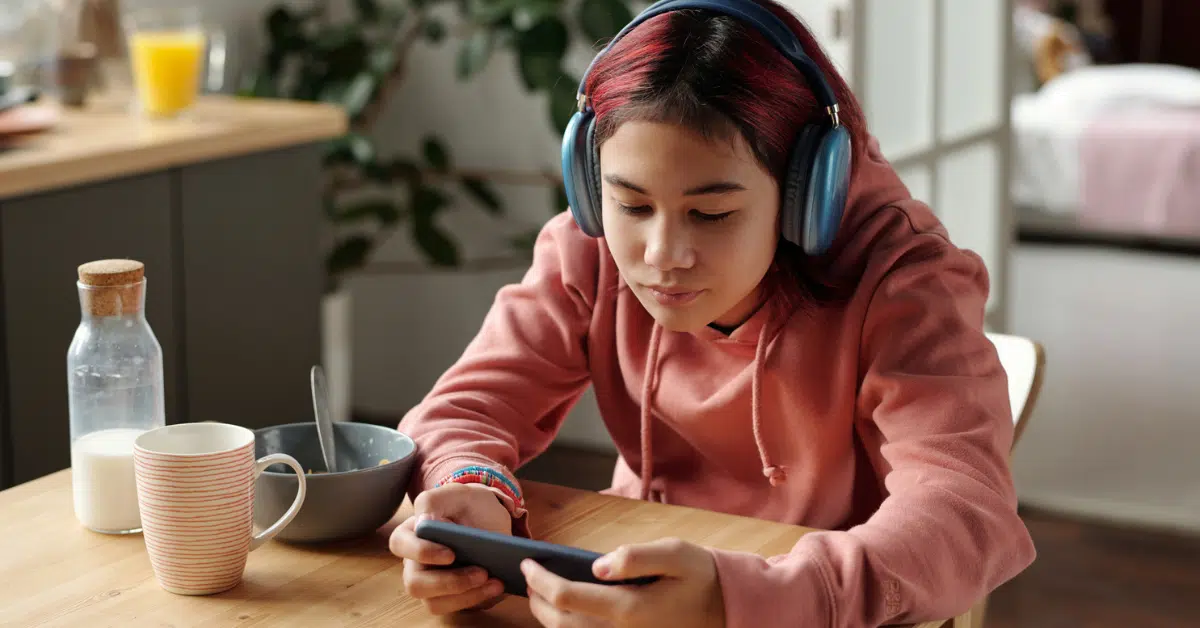
In an age where screens dominate our lives, the connections we make online can often feel more real than the ones we have sitting right in front of us. Enter parasocial relationships—one-sided bonds some people develop with fictional characters, celebrities, and even artificial intelligence. For many young people, these connections offer a comforting escape, a source of inspiration, and a sense of belonging in a world that can sometimes feel isolating.
While these relationships can have benefits they can lead to unhealthy attachments or make people, especially young people, shy away from real-life connections and experiences. In this article, we’ll explore the benefits and risks of parasocial relationships.
What You’ll Learn:
- What is a parasocial relationship?
- What are some examples of parasocial relationships?
- How do parasocial relationships impact mental health?
- What are the benefits and risks of parasocial relationships?
Quick Read
Parasocial relationships are one-sided connections that individuals, especially teens and young adults, form with celebrities, fictional characters, or chatbots. These relationships can provide comfort, inspiration, and a sense of belonging, helping to reduce feelings of loneliness. However, they also carry risks, such as fostering unhealthy attachments and hindering the development of real-life relationships.
While parasocial interactions can boost mood and offer emotional support, they are ultimately static and lack the depth of genuine connections. It’s essential to recognize their limitations and ensure they do not replace meaningful human relationships. Balancing parasocial ties with real-life interactions is crucial for mental health and personal growth.
What Is a Parasocial Relationship?
The term ‘parasocial relationship’ was coined by psychologists Donald Horton and R. Richard Wohl in 1956, when televisions became widely available. Parasocial relationships are characterized by a one-sided emotional connection where an individual feels a deep sense of intimacy or familiarity with someone they have never met, typically a celebrity or media figure. These connections are purely mental, as the person experiences a sense of attachment without any mutual interaction.
Parasocial relationships are comforting because they don’t require the hard work of real relationships. For example, a teen may feel like they know their favorite musician, Youtuber, or television star—just by consuming everything they’ve produced. Or, a young adult may read books or watch TV shows that you love over and over just to reconnect with the characters.
The illusion of intimacy in parasocial relationships can feel very real and can lead many teens and young adults to develop strong emotional attachments. Young people who are struggling to make friends or feel lonely may find comfort in parasocial relationships, but it’s important to understand the risks and the impact on mental health.
Types of Parasocial Relationships
From book and movie characters to reality stars and AI, young people can develop a sense of deep connection over time, forming a parasocial relationship.
Characters from Books or Movies
Everyone has their favorite fictional characters from books or movies. You know that they aren’t real, but you connect with their personality, attitude, or actions in some way, and you draw inspiration from them—even wondering what they might do in a particular situation.
Parasocial relationships go a little further when people begin to personally identify with these characters. This might involve creating fanfiction, surrounding themselves with memorabilia, dressing up as the character, or even building much of their life in or around the theme of their favorite “world.” While initially benign, this can become detrimental when it starts to be a frequent escape from reality or to hamper a person’s ability to socialize with others who may not share those interests.
Celebrities and Influencers
Social media has given us greater visibility into celebrity and influencer lives, creating a false sense of connection for some.
These parasocial relationships are taking on new forms, too. A recent study looked at how fans of K-pop, specifically the BTS fans (often called ARMY) in Indonesia and how they have developed deeper connections with their favorite artists. Using a method called virtual ethnography, the researchers found that fans are moving from just watching and admiring their idols to actively engaging with them through platforms like Weverse and Instagram. This allows fans to feel closer to the artists and participate more in fan culture, including creating content and joining social campaigns.
And for young people who watch live-streamers, this connection can be hard to decipher with real-time interactions and sometimes financial contributions that go toward supporting the host.
Chatbots and AI
Artificial intelligence (AI) has provided a new arena of parasocial relationships in the form of chatbots. Many young people have become more dependent on chatbot usage, for advice, academic assistance, even therapy.
Chatbots are designed to be responsive and positive, imitating human relationships without any of the friction or potential rejection that comes with human interaction. They can be encouraging to talk to, a sounding board for ideas or a comforting voice when you’re troubleshooting an issue, but they can only offer imitation—not real connection.
The Role of Social Media in Parasocial Relationships
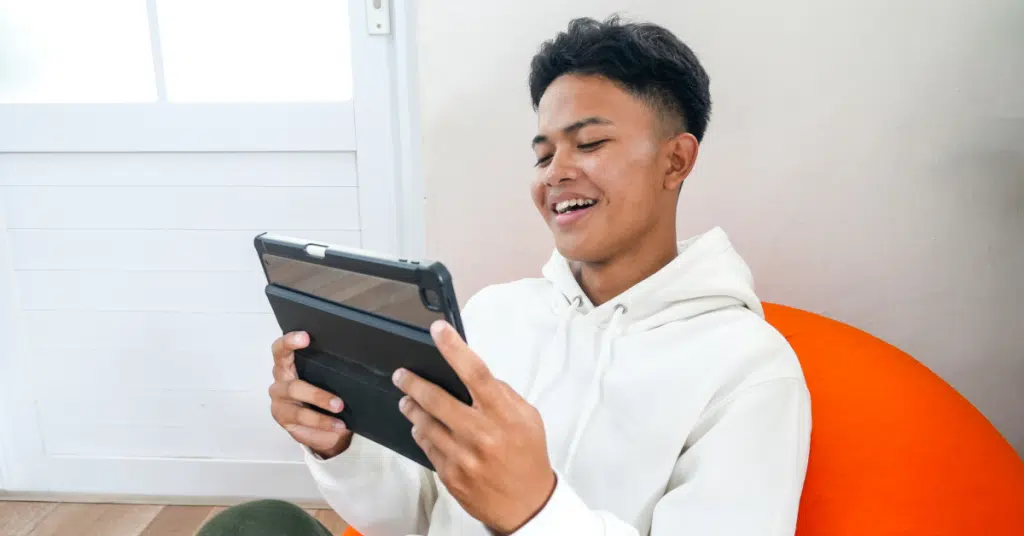
Social media platforms have transformed the way parasocial relationships are formed and maintained. Unlike traditional mass media, social media allows media users to interact with media personalities in seemingly direct and personal ways—through comments, likes, shares, and even private messages. This gives the feeling that there’s a two-way connection and interaction, which makes the one-sided relationship seem more real and engaging.
By following celebrities, influencers, or even fictional characters on social media, young people gain access to glimpses of their personal lives, interests, and daily routines. This constant stream of updates can deepen the sense of connection and intimacy, and fans feel like they are part of the celebrity’s world. For example, a teen or young adult might feel a sense of pride when an influencer responds to their comment.
Benefits and Risks of Parasocial Relationships
Parasocial relationships can affect our mental health in a positive way but they also pose risks. One study that examined parasocial interactions among 151 early adolescents found that these connections can help shape their identities and independence. Most participants admired actors and singers, often viewing them as relationship partners. Boys tended to choose athletes as mentors, while girls focused on actresses as friends. These different types of relationships suggest that boys may look to celebrities as role models, while girls may develop their sense of self through friendships with admired figures.
For the 1 in 3 young adults who report feeling lonely, these connections could be filling a void and providing comfort. Research from Scientific Reports shows that our feelings are shaped by the people we’re close to, even if those connections are just in our heads.
And while research shows these one-sided bonds have benefits that can improve your mood, they also have risks that can impact mental health through negative self-comparisons. They can lead to intense obsession, anxiety, or neglect of real-life social relationships and real-life friends.
What Is a Parasocial Breakup?
A parasocial breakup occurs when someone experience a sense of loss or separation from the personality they admire. This can happen when a celebrity retires, a fictional character leaves a TV show, or a beloved series ends. These breakups can evoke real-life feelings of grief, sadness, and emotional distress—emotions felt during the end of actual relationships.
The impact of a parasocial breakup can be significant, especially for teens or young adults who have invested a great deal of time and emotion into their unreciprocated relationship. For instance, when a long-running TV show ends, a young person may feel a profound sense of emptiness and loss, as if they are saying goodbye to close friends. Researchers have found that such experiences can affect mental health, leading to periods of adjustment, having to come to terms with the end of their parasocial connection.
The intensity of these feelings highlights how meaningful parasocial relationships can become in young people’s lives, and why their loss can be so deeply felt—even though the relationship was never reciprocal or based in real life.
Is it Time for a Parasocial Breakup?
If you feel like your parasocial relationship has become unhealthy, or you are concerned about your teen, consider the following questions:
- Is the parasocial relationship taking the place of in-person, genuine relationships in your life?
- Are you anxious or sad when you are not consuming the person’s content?
- Are you neglecting real-life responsibilities?
- Do you consider this online personality a friend or that there is a mutual connection?
- Are you consumed with finding out more and more information about the celebrity?
If you recognize you are engaging in an unhealthy parasocial relationship, it’s important to put boundaries and limitations in place to protect your mental health. If the relationship is causing distress to you or a loved one, it may be time to get a mental health professional involved.
Mental Health Treatment for Teens and Young Adults in Minnesota
For teens or young adults who are resisting reality and maturity by escaping into the world of parasocial relationships, mental health challenges can arise. A lack of healthy human connection, as well as exposure to unrealistic lifestyles and expectations, can drive the development of depression, anxiety, and other mental health conditions.
If you or a loved one is struggling with psychological dependence on media, chatbots, or other one-sided parasocial interactions, call us at 952-826-8475. Or request a complimentary screening using the button below.
PrairieCare has a full range of programs and services for teens and young adults. With locations in the Twin Cities, Mankato, and Rochester, quality mental healthcare is closer than you might think.

Sources:
- Journal of Asian Sociology Vol. 54, No. 1 (March 2025)
- Curr Opin Psychol. 2022 Jun:45:101306.
- Sci Rep. 2024 Apr 8;14:8185.
- Front Psychol. 2017 Feb 23;8:255.