

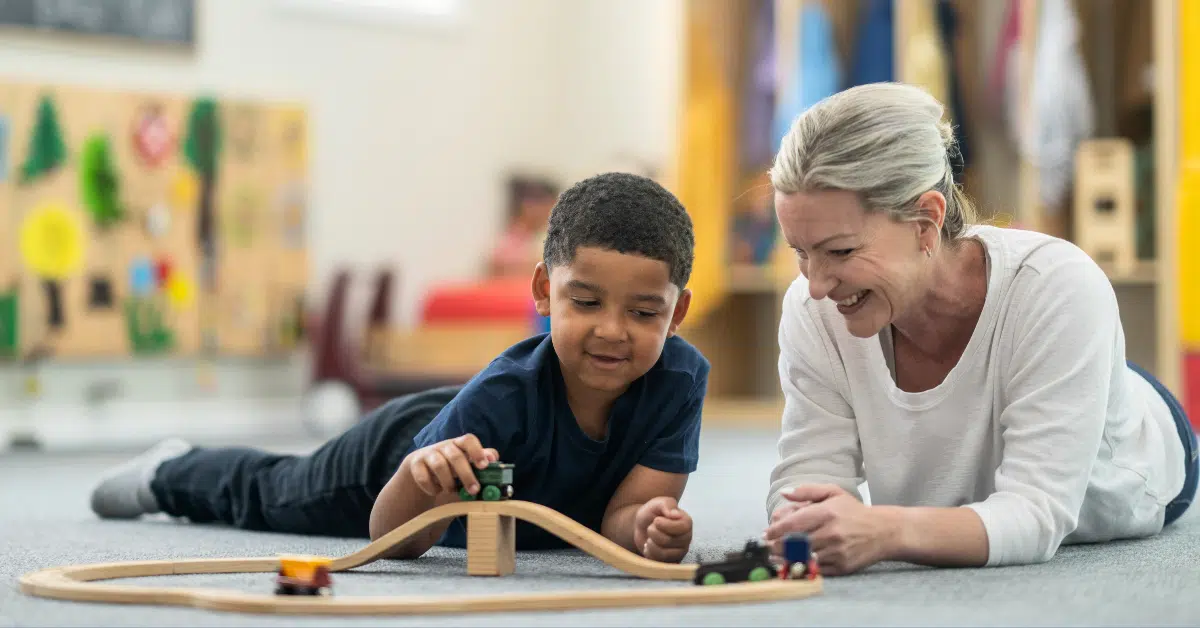
When someone asks you what you do for a living, they generally understand what your job entails. A doctor. A teacher. A secretary. But the title “Recreational Therapist” often gets a blank stare. People will ask (or think), “What does that mean? You just play all day? What do you even do? Did you even have to go to school for that?”
Here’s how PrairieCare Recreational Therapist Beth Vance describes her role: “In the simplest terms, yes, I play all day.” What isn’t always stated, she says, is the lessons that are learned through play: working with others, taking turns, sharing, sportsmanship, listening, confidence, self-esteem, calming strategies, coping skills, handling stress, the list goes on.
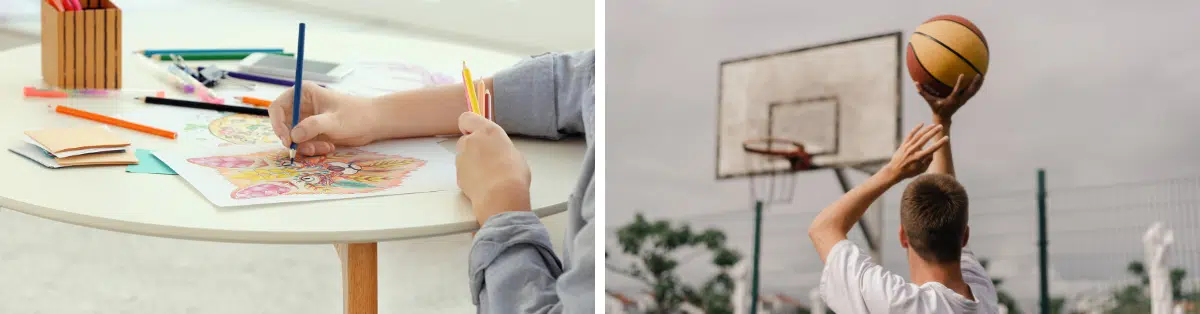
“It can look like I’m just watching a movie with kids,” Beth says. “You could peek into a group room and see the group of us coloring pictures. You may walk past us playing catch. Groups can consist of us playing with action figures. We could be having a spontaneous dance party. On any given day, you will hear incredible laughter from the group room. So we can’t be working on anything serious or meaningful, can we?”
What Is Recreational Therapy?
Recreational therapy uses a variety of activities to educate patients with mental health challenges on leisure, life skills, social skills, and more to help patients reach their goals. The therapist works with a patient’s unique needs to help improve someone’s independence in their daily life and restore their well-being. A group may use art projects, music, games, or other creative approaches to guide essential lessons to a treatment plan. Activities are achievable and accessible so patients can continue them in their daily lives even after discharge.
For kids and teens, it can be hard to work through difficult emotions. If they don’t have the tools to cope or understand a situation, it will make it difficult to move forward in their treatment. Recreational therapy allows young patients to have fun while learning lifelong skills.
How Recreational Therapy Works
Play can be a powerful tool in therapy. Patients can learn important lessons, embrace joy again, and become physically active, which has proven helpful in mental health treatment. Incorporating typical childhood behaviors with complicated goals can be a turning point for many young people to improve their symptoms.
“The action figures help the patients talk about appropriate social skills by having the characters act them out,” said Beth. “That dance party? Those girls just had a very emotional therapy process group and needed to lighten their moods. The laughter? It comes from us getting down on the kids’ level-acting unbelievably silly and joking with them. They don’t realize they are learning how to feel comfortable with making themselves look silly in front of others while they get to see us in a different light.”
Lessons Learned in Recreational Therapy
It isn’t always easy to keep children and teenagers engaged or explain complex situations or concepts to them. That’s why recreational therapy has a vital role in recovery. “Sure, we could sit kids down and give lectures about how to react in certain situations,” said Beth. “We could give them worksheets in order to practice these skills. We could even test them on what they’ve learned.” But that probably won’t work very well.
Beth describes these lessons through play like this: “We’re not just coloring pictures. We are learning to relax and relieve stress while talking about the day and about what worries the kids have. We’re playing catch, but also building a relationship of trust that the ball will come back, comfort of being around someone you didn’t even know last week, and learning to laugh at yourself when you miss the catch.”
“Our patients are constantly learning lessons without even realizing it,” Beth says. “Lessons to help with mental health? Definitely. But what’s more? I’m teaching these kids how to be kids. Never forget to play!”
Recreational Therapy Isn’t Just for Kids
Just because a patient is an adult, doesn’t mean they can’t benefit from recreational therapy. In fact, it can be a big part of building a healthy structure while managing a mental health disorder. “With our adult patients, Recreational Therapy plays a large role in helping our patients learn to structure their time in healthy ways,” said Beth. “While adulthood brings many freedoms, this can be overwhelming for some, if not all of us to a point.”
At PrairieCare, our inpatient hospital treats patients 35 and younger. In all of our units, including our adult unit, we use recreational therapy as part of a patient’s daily schedule. Since adults can express their feelings and goals more than a child or even a teen, the team focuses on a plan driven by the patient and their current life.
Beth explains rec therapy in the adult unit as such: “Our groups vary from self-care practices and setting a routine, to how to find and interview for a job. We work on budgeting, finding resources in the community, and all of those skills that it takes to function as an adult. Promoting independence as well, our team has curated a collection of resource cards that the adults can review at their leisure, building a repertoire of tips for life outside of the hospital. With those who have substance abuse disorders, we focus on helping our patients structure their free time with healthy habits and activities rather than turning to their substance use.”
Additional Therapy Approaches Used in a Treatment Plan
Various forms of therapy can assist and support clinical approaches to treating a mental health condition. For many people of all ages, engaging in a creative approach or focusing on being part of the community can help improve their symptoms. Overall, these therapies consider the unique needs of each patient to create sustainable outcomes in their recovery.
Art Therapy
Art therapy is a unique combination of psychological understanding and visual arts that helps patients improve their psychological health, cognitive abilities, and sensory-motor functions. The child is given a safe, supportive, structured environment that allows the child to process their issues and struggles using the art-making process.
The art supplies available, chosen, and utilized by a patient help facilitate the therapy process. The positive relationship that develops between a therapist and a child allows the child to address and resolve their issues. Through art therapy, children can resolve conflicts and problems, develop interpersonal skills, manage their behavior, reduce stress, increase self-esteem and self-awareness, and achieve new insight into the feelings they are experiencing.
Music Therapy
Similar to art therapy, music therapy helps patients focus on a creative outlet to work through mental health challenges. Music has a natural mood-lifting ability and can aid in treatment even if someone doesn’t have a background in music. Therapy sessions can include making music, writing songs, listening to music, or dancing along to the music. Music therapy can help someone move through difficult emotions and gain a helpful way of coping with stress, anxiousness, and more.
Occupational Therapy
Occupational therapy helps people do what they want and need to do through the therapeutic use of daily activities. When using the word “occupation,” we mean it in the sense of how you occupy your time. Occupational therapists (OTs) enable people of all ages to live fully by helping them promote health and prevent (or live better with) injury, illness, or disability. OTs are trained to evaluate all the components of activity performance and determine how they interact and impact a person.
For example, when looking at a person’s abilities to engage in their daily activities, OTs will determine whether a person’s body structure, motor skills, social-emotional skills, cognitive skills, sensory processing abilities, the influence from their environment (home, school, work, or community), habits, routines, and roles influence their participation.
Play Therapy
With play therapy, a therapist uses toys and play to observe how a child interacts with the world. Play therapy is often used with children since it’s harder for them to clearly communicate their feelings. Through play, children can show what they are experiencing. A therapist can redirect the interaction to demonstrate healthy management skills and work through complex situations.

Start Recreational Therapy in Minnesota
At PrairieCare, we incorporate recreational therapy at our hospital and Medical Office Building in Brooklyn Park. Our team uses comprehensive assessment and the support of a multidisciplinary team to ensure your treatment plan puts you on the path to healing and enjoyment.
If you are looking to start therapy in Minnesota, you can call our team at 952-826-8475 at any time. You can also fill out our no-cost screening form, and a member of our team will contact you within one business day.
PrairieCare has locations across the Twin Cities and Southern Minnesota, including:
- Brooklyn Park
- Edina
- Mankato
- Maple Grove
- Maplewood
- Minneapolis
- Rochester
- Woodbury
About PrairieCare
At PrairieCare, we believe that mental illness is real, common, and treatable. We provide individuals of all ages with the psychiatric care they truly need. PrairieCare is one of the nation’s largest providers of premier psychiatric services to the Twin Cities metro area, Rochester, and Mankato. Our programs and services span the full continuum of care, with the understanding that each patient has unique experiences, life stages, and needs.
Whether a young adult is experiencing anxiety in college or a teenager needs support for an eating disorder, our clinicians are accredited and highly experienced in supporting patients of all ages with a wide variety of diagnoses.