

For people with severe, treatment-resistant depression, conventional methods of symptom relief don’t always work. Fortunately, there are revolutionary therapies that directly address one of the primary sources of depression: brain function. Transcranial Magnetic Stimulation (TMS) and Electroconvulsive Therapy (ECT) are two methods that focus on the brain to stimulate nerve cells and support brain chemistry to reduce the symptoms of depression.
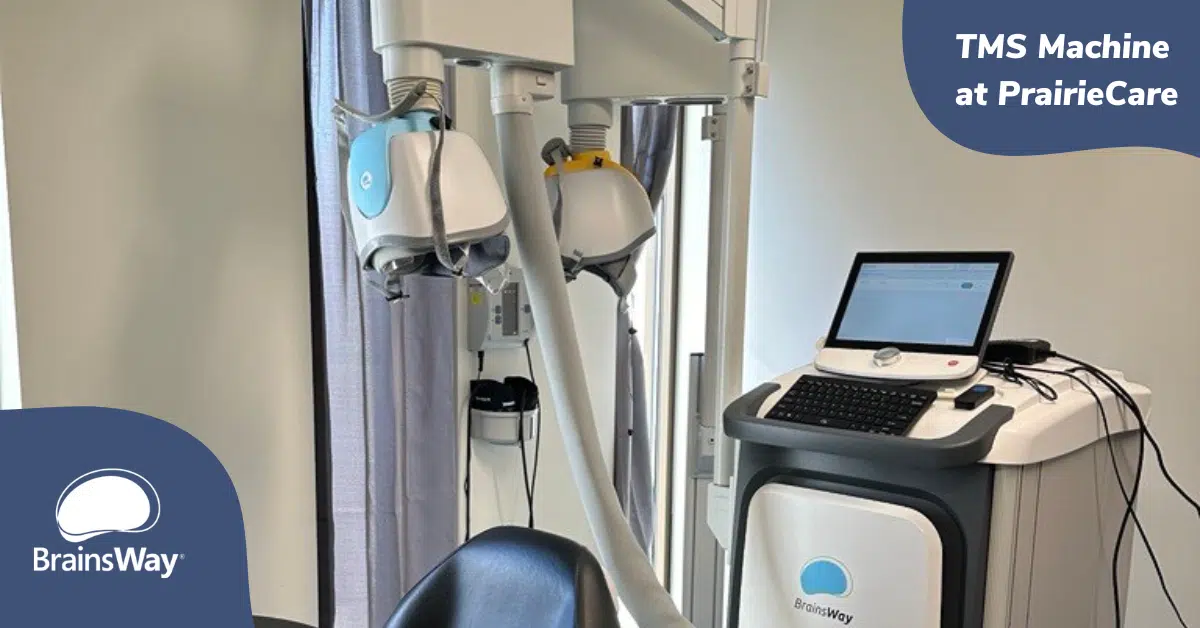
PrairieCare offers TMS, a noninvasive therapy in which magnetic pulses are administered to a patient’s brain via a helmet. But at first glance, TMS can be confused with ECT. Frequently referred to as “shock therapy,” ECT is often portrayed in movies and on TV as primitive, radical, and frightening. Today, the therapy has become safer, and is effective for people with mental illness.
ECT and TMS have similarities, as well as differences that can make them more or less appealing to patients depending on their needs. These therapy approaches are not the first-line treatment option for people experiencing depression. Rather, they are a backup when other therapies don’t work. One ECT and TMS have in common is that they can be life-changing for people with depression. Read on to learn more about TMS vs. ECT.
What Is TMS and What Is ECT?
Both TMS and ECT are effective in treating major depressive disorder by focusing on the brain to reduce depression symptoms. However, they use significantly different methods.
Here, we examine the differences between the therapies to understand why one may be a better fit than the other, depending on a person’s treatment history.
What Is Transcranial Magnetic Stimulation (TMS)?
Transcranial Magnetic Stimulation is a revolutionary and non-invasive therapy that became FDA-approved in 2008 to help people with severe, treatment-resistant depression. TMS therapy is delivered via a coil that uses magnetic pulses to stimulate the brain’s prefrontal cortex, which regulates mood.
TMS therapy is an outpatient procedure, with no sedatives needed during the session. The helmet or pad is placed on a patient’s head, and magnetic pulses activate nerve cells for about 20 minutes. The pulses feel like taps on the person’s head, and they are actually stimulating the brain. Over several appointments, neural activity in the patient’s brain will begin to increase, leading to symptom reduction and even remission.
Since TMS is a noninvasive therapy, patients can resume their daily activities right after the appointment. The short TMS sessions and minimal side effects make this therapy flexible so patients can maintain their responsibilities outside of treatment.

Ready to take the first step in receiving TMS therapy? You can call our TMS team at 952-737-4510 or you can request a no-cost screening using our form.
What Is Electroconvulsive Therapy (ECT)?
ECT, or Electroconvulsive Therapy, was first developed in the late 1930s to treat various psychiatric disorders, including severe depression, mania, and catatonia. Today, one of the main uses for ECT is for people with severe depression, when therapy and medications haven’t improved the patient’s symptoms.
The therapy uses an electric current to the patient’s brain without a specific location. The provider places small electrodes on the patient’s scalp to deliver controlled electrical currents to cause a “therapeutic seizure” that lasts for less than a minute. The electricity-induced seizure affects the neurons and chemicals in the brain. In simple terms, it resets the brain and reduces the symptoms of depression. The seizure does not cause a full-body muscle movement, but rather, it is focused on the hand, which a professional monitors closely.
ECT treatment takes place in a hospital operating room under general anesthesia. Although the patient does not experience pain during the procedure, they may feel groggy and have varying side effects after each session.
The Similarities and Differences Between TMS and ECT
Understandably, people confuse the two therapies. The similarities and differences between the two treatment options can be broken down into five areas.

The Mechanism to Improve Symptoms
Both TMS and ECT use technology that focuses on the brain. Rather than something like medication, which has full-body effects, these therapy options target the brain, resulting in reduced depressive symptoms. Although they both focus on the brain, the symptom relief mechanism is different.
- ECT uses electrical currents on the whole brain to initiate a seizure. The seizure resets the brain, slowly eliminating depression symptoms.
- TMS uses magnetic pulses on the prefrontal cortex of the brain. It stimulates the nerve cells over a period of time, to facilitate growth and healing in the portion of the brain responsible for mood regulation.
Treatment Environment
One of the most significant differences between the two therapies is the treatment setting in which the therapy is administered.
- Because ECT induces a seizure, a patient must be under general anesthesia for pain management and safety. Each treatment session is completed in an operating room, and an entire treatment team is responsible for monitoring the treatment from start to finish.
- TMS occurs in an outpatient clinic and is considered a simple procedure. For each TMS session, a patient is awake during the therapy and is free to watch a show or relax.
Side Effects
Understanding potential side effects help potential patients decide what’s best for them. With TMS and ECT, people sometimes have increased concerns about discomfort throughout the treatment plan.
- ECT has an increased risk of side effects due to the induced seizure and the use of anesthesia during each session. Some of the most common side effects after treatment can include confusion, memory loss, physical reactions such as nausea and muscle aches, and pain throughout a patient’s head and jaw. In rare circumstances, people can have memory loss from prior years to ECT therapy and serious heart problems.
- TMS is a noninvasive procedure with minimal and manageable side effects. Some of the most common side effects include temporary site discomfort, facial twitching, or mild headaches, which quickly fade after treatment. After two weeks of therapy, any symptoms fade away, and patients will have virtually no side effects.
Treatment Plan
Like any treatment for depression, patients will not experience results after one session. TMS and ECT treatment have evidence-based standards. Preparation for treatment includes a thorough assessment by a trained professional to build an individualized plan.
- ECT therapy is typically administered 2–3 times a week over about six weeks, for a total of about 10–12 sessions. Each session is done in an operating room and takes about 60 minutes. After a few hours, some patients can return to their normal activities, while other ECT patients may need to avoid activities such as working or driving.
- An average TMS plan includes 3–5 weekly treatments over six weeks for about 30 sessions. Each session lasts about 20–30 minutes, and patients can return to normal activities right after the therapy. Learn how long it takes for TMS to work and see a typical TMS treatment plan at PrairieCare.
Patient Independence
An important part of the decision-making process for potential patients is the level of independence they can maintain as they move through treatment.
- ECT requires a larger support network than TMS. ECT sessions require general anesthesia, and the side effects of the procedure can cause confusion directly after the treatment. Patients must have a support person to assist them after the treatment and to drive them home as they recover.
- TMS has no recovery time and does not require the assistance of a friend, family member, or caretaker. Since TMS patients are fully awake and not groggy after treatment, they can maintain their typical responsibilities after a session, such as driving, working, or caring for their families. In addition, there are few to no side effects that affect patients’ ability to participate in regular daily activities.
No matter what, we still recommend a support system as someone embarks on intensive treatment for depression. Having a network of friends and family to talk to during treatment can help you share your feelings, reconnect on a social level, and create a positive mindset, which has been proven to improve the effectiveness of the therapy.
What ECT and TMS Have in Common: Relief for Treatment-Resistant Depression
ECT and TMS offer depression relief when other methods haven’t worked before. These therapy options are not an initial quick fix. Instead, mental health professionals will recommend that patients try talk therapy, medication, and other methods first. If a patient continues to struggle, a professional can recommend ECT or TMS and introduce a new opportunity for relief.
Both methods pinpoint the source of the issue and jump-start important nerve cells. For severe, treatment-resistant depression, ECT and TMS can have effective and even life-saving results.
How Effective is ECT vs. TMS for Depression?
The main reason to consider ECT or TMS is because previous therapeutic approaches have not improved depression symptoms. So, that begs the question of whether one method is more effective than the other. Studies show that ECT has higher success rates than TMS, but both approaches are highly effective to improve symptoms.
One study demonstrates that ECT has higher success rates than TMS in improving depression symptoms and reducing suicidal behavior. However, for the most part, patient outcomes for the two therapies are very similar. According to NAMI, 70–90% of ECT patients have improved symptoms, while 30–64% of TMS patients reported an improvement.
Although ECT is considered a more effective method in improving depression symptoms than TMS, concerns over side effects can often outweigh its effectiveness when choosing a therapy option. Both treatments are safe, but the treatment plans are significantly different, and one or the other may be a better fit for a patient’s life.
The Pros and Cons of TMS vs. ECT
Now that we have covered the many similarities and differences between the two therapies, let’s break down the pros and cons to help patients and providers determine which therapy is the best fit.
The Pros and Cons of TMS
Pros:
- Has fewer side effects, and if they do occur, they are less serious
- Treatment occurs in an outpatient clinic
- Patients can maintain their independence and continue their daily activities right after each session
- No recovery time
Cons:
- May be less effective in treating depression than ECT
- Requires more sessions than ECT
Explore the 10 benefits of TMS therapy.
The Pros and Cons of ECT
Pros:
- Considered the most effective method in treating depression
- Fewer treatment sessions to start seeing results when compared to TMS
Cons:
- Higher chance of side effects that can be serious
- Involves general anesthesia and an operating room
- Recovery after each session may take hours or days
- Less independence and requires a support person following sessions
Is TMS or ECT Better?
Ultimately, there isn’t a single answer to whether one treatment is better than the other, but we can learn from people who have finished a treatment plan and shared their experiences. In one study, researchers analyzed the clinical effectiveness of TMS and ECT based on success rates, patient responses, side effects, and financial worthiness.
The study showed that although ECT was more effective in treating depression symptoms, the difference between the two therapies was not significant. ECT had a higher rate of side effects than TMS. Some patients in the studies would have preferred TMS therapy but had financial barriers that prevented them from participating in TMS.
Overall, patients had a strong preference for TMS over ECT. Most said they would prefer TMS even if the success rate was lower than ECT, especially if the cost is not a factor. Their preference for TMS was primarily based on the higher risk of side effects associated with ECT
No matter what, if you haven’t experienced an improvement in your depression symptoms, learning more about either treatment could be the first step in accessing life-saving care.
Interested in TMS? Contact Our Team.
We understand you may have questions before taking the first step toward TMS therapy. PrairieCare offers a free consultation with our experienced care team.
- Call for TMS Consultation: 952-737-4510
- No-Cost Mental Health Screen: 952-826-8475
PrairieCare’s Minnesota TMS Locations
We offer convenient locations for Transcranial Magnetic Stimulation near Minneapolis in Edina and Woodbury. Patients in TMS therapy will meet regularly with their treatment team and a psychiatrist. Each site has a dedicated psychiatrist who will oversee the treatment plan.
About PrairieCare
At PrairieCare, we believe that mental illness is real, common, and treatable. We provide individuals of all ages with the psychiatric care they truly need. PrairieCare is one of the nation’s largest providers of premier psychiatric services to the Twin Cities metro area, Rochester, and Mankato. Our programs and services span the full continuum of care, knowing that each patient has unique experiences, life stages, and needs.
Whether a patient needs perinatal psychiatric care or manages anxiety in school, our clinicians are accredited and trained to help. We support patients during their time with us and create sustainable outcomes for them to reach their goals.