

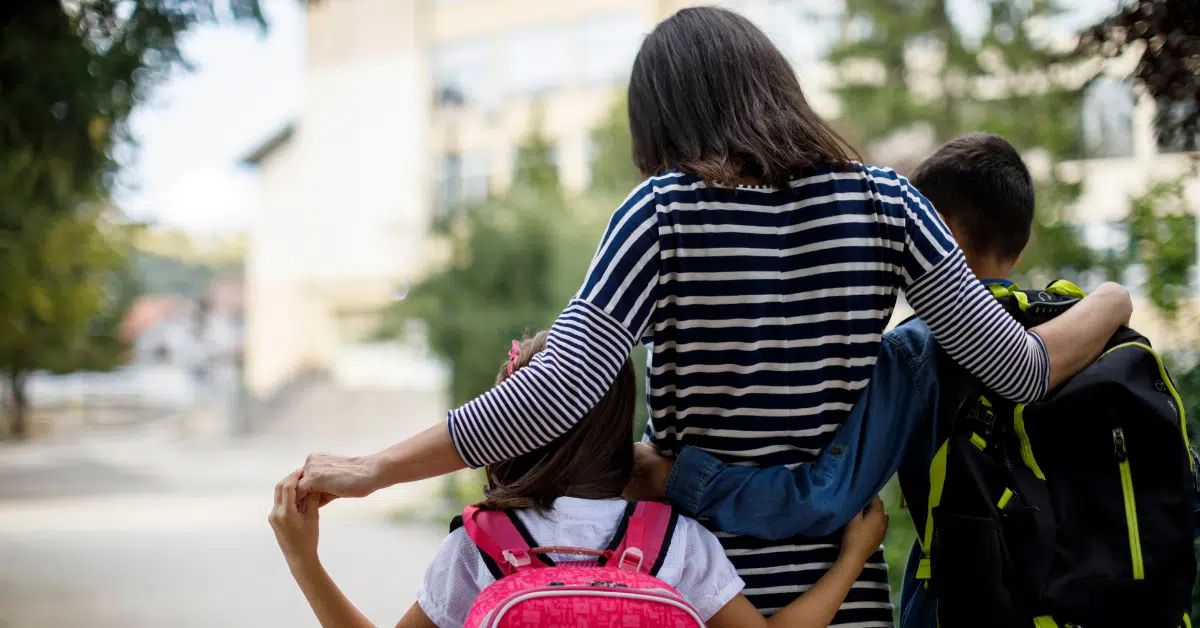
“I’m scared to go back to school.” There are many reasons why a child or teen might be feeling this way as summer gradually comes to an end. Whatever they’re going through, parents need to validate their emotions and help them cope with back-to-school stress.
Understanding why a child is scared to go back to school is the first step in addressing their anxiety. After clarifying the issues, parents can support their kids and teens in developing healthy coping skills to manage back-to-school stress.
What You’ll Learn
- What are some of the most common reasons kids and teens feel scared or anxious about going back to school?
- What signs might indicate that a child’s back-to-school anxiety needs extra support?
- What evidence-based coping strategies can help children manage school-related stress and build resilience?
- How can parents create routines and conversations that ease their child’s worries about returning to school?
- When should families seek professional mental health treatment for school-related anxiety or trauma?
Quick Read
Returning to school after summer break can feel overwhelming for many children and teenagers. New schedules, classmates, and responsibilities naturally bring some nerves, but deeper worries—like bullying, academic pressure, racism, or safety concerns—can add to the stress. Even students who usually enjoy school may feel anxious when facing a new grade, teacher, or environment.
Parents should watch for signs that anxiety is more than first-day jitters. Clinginess, unexplained stomachaches, headaches, irritability, sleep disturbances, or frequent crying may indicate that a child requires additional support. Some children discuss their fears, while others exhibit stress through physical symptoms or mood changes.
The good news is that kids can build resilience with the right tools. Positive coping strategies—like reframing worries, leaning on personal strengths, and sharing emotions—help reduce anxiety. Parents can support their child by keeping routines predictable, asking open-ended questions, and validating their child’s feelings. If anxiety lingers, connecting with teachers, counselors, or a mental health professional can make a big difference.
10 Reasons Why a Kid Might Be Scared to Go Back to School
Even though it comes around every year, the shift from summer vacation back to school is a big one for teens. It’s natural for kids to feel some stress when dealing with change. That might be a change in their daily schedule, activities, peer interactions, and responsibilities.
Here are some of the reasons why a child or teen might be nervous to go back to school:
- Verbal and physical bullying
- Worries about academic pressure—especially for kids and teens who struggle with perfectionism
- A history of experiencing extreme anxiety in school
- Concern about other students’ erratic or violent behavior
- Scared of being rejected or “cancelled” by peers
- Anxiety about school shootings
- Feeling like school is “optional”
- Racism in school—one-third of students report being treated badly or unfairly in school because of their race or ethnicity.
- Social anxiety
- Nervousness about the unknown—a new school, new classes, starting high school, etc.
Signs That a Kid Is Scared to Go Back to School
These symptoms of back-to-school anxiety indicate that a child or teen needs additional support to navigate the transition to the classroom:
- Unusual levels of clinginess
- Restlessness and appearing fidgety
- Stomachaches and headaches for no apparent reason
- Getting upset or angry more easily
- Changes in eating and sleeping habits
- Expressing negative thoughts or worries
- Crying all the time
- Difficulty concentrating
If kids exhibit any of these symptoms, it’s essential to talk with them about whether they’re nervous to go back to school and help them build stress-management skills.
3 Evidence-Based Strategies for How to Deal with Back-to-School Stress
Experiencing challenges and stress can actually help children and teens grow emotionally, if they have the right tools to cope with them. A study of adolescents returning to school after COVID-19 closures helps shed light on the coping skills that are most supportive of young people’s well-being and development.
The researchers found that three specific cognitive, emotional, and behavioral coping skills helped students experience “stress-related growth”:
Positive Reappraisal
Similar to reframing, this strategy involves attaching a positive meaning to an event or challenge in terms of personal growth. For example, a student who has experienced a panic attack in school in the past might be scared to go back to school because they’re afraid it might happen again.
Instead, they can focus on how they recovered from the attack and the tools they learned for dealing with anxiety. In this way, the event becomes a positive experience because it helps them gain mental strength and skills.
Strengths Use
Using your strengths means activating your natural abilities and characteristics to address challenging situations and events effectively. Hence, a child or teen who is nervous about going to a new school, or about the transition from middle to high school can lean on their strengths to help them cope. They might use humor and curiosity to get to know classmates. Or they might use perseverance and bravery to push through their fears.
Research shows that kids whose parents help them become aware of and use their strengths have better well-being, life satisfaction, and self-efficacy. Self-efficacy is the ability to exert control over one’s circumstances and environment. That’s the opposite of the helplessness and lack of control that both children and teens often experience during this stage of life, when their freedom and power are necessarily limited.
Emotional Processing
Emotional processing refers to the way a person deals with and expresses their emotions during times of stress. If a child or adolescent can express “I’m scared to go back to school,” that’s a step in the right direction.
Then parents can praise their children for being honest and transparent about how they’re feeling, even though it may not be easy to admit. Being open about their emotions lays the groundwork for processing their anxiety and finding tools for coping.
Back-to-School Stress Tips
Ryan Fedoroff, M.Ed., our parent company’s Vice President of Learning and Development, recommends the following approaches for addressing back-to-school anxiety in adolescents and younger children.
- Establish morning and evening routines. Stick to a schedule, including a regular wake-up time, breakfast, family meals at night, and a set lights-out time—preferably with phones turned off an hour before bed. “Kids thrive in an environment that feels predictable, and it can help to calm any anxiety or stress about going to school,” Ryan says.
- Ask open-ended questions. How should a parent respond when a child or teen asks, “Why am I scared of going back to school?” or “Why am I nervous to go to school?” The best way, Ryan says, is to ask more questions so you can better understand what they’re feeling and the reasons for their anxiety.
- Offer affirmations and validation rather than solutions. You might not be able to fix whatever your child is nervous about. However, you assure them that it’s natural to feel anxious and that they are not alone in this way. “Let them know that it’s normal and okay to be feeling a range of emotions at this time,” Ryan says.
- Connect with your child’s school. If your kid is nervous about their ability to handle their academics, stay in touch with their teachers about assignments and expectations. Parents can also reach out to the school guidance counselor to inform them about their child’s or teenager’s back-to-school anxiety.
- Visit a doctor or mental healthcare provider. If being scared to go back to school progresses into symptoms of acute or chronic anxiety, more support is necessary. “If you see concerning or potentially dangerous behaviors in your child, talk to a professional for guidance,” Ryan says.
Treatment for Youth Trauma and Anxiety at PrairieCare
If a kid’s stress or sadness about school doesn’t go away within a few weeks, they might be struggling with an underlying mental health disorder that requires treatment, such as anxiety or depression. Or, if your child is already experiencing anxiety, trauma, depression, or another mental health condition, going back to school can bring the issue to a head. If things aren’t going well as children and adolescents transition back to school, treatment may be necessary—for the child as well as the whole family.
At PrairieCare, we address child and teen mental health through a full continuum of care and a compassionate team of experts who are ready to help. Contact us today at 952-826-8475 or use the button below to request a call from our team.

Sources
- Youth Risk Behavior Survey, 2021–2023
- Front Psychol. 2021; 12: 643443.
- Front. Psychol. 2017 Oct; 8: 1707.
- Pew Research Center