


If you’ve been feeling down during these fall months leading into winter, just know, you are not alone.
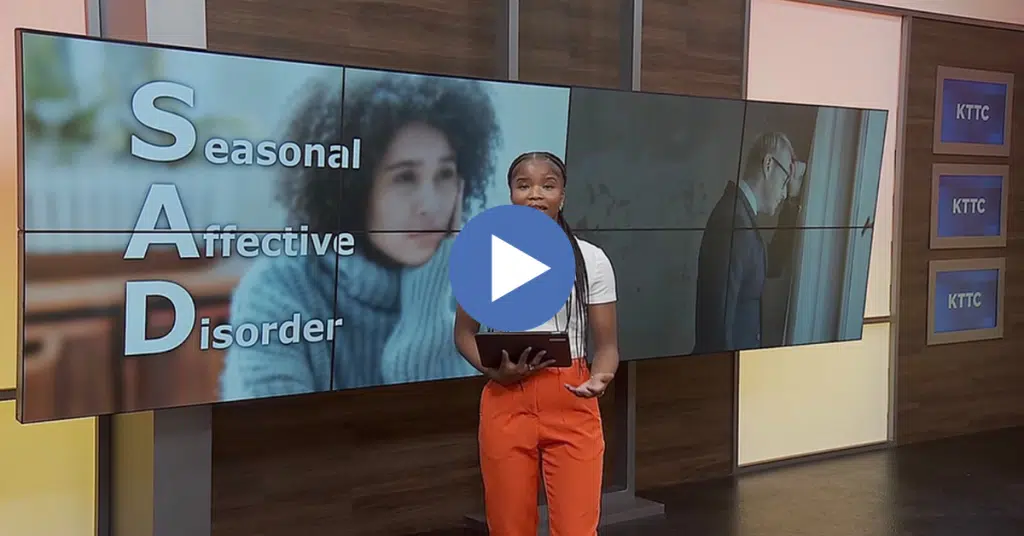
PrairieCare mental health experts say Seasonal Affective Disorder (SAD) is a type of depression that typically tends to follow a seasonal pattern. Most commonly seen in the fall and winter months.
“We’ve heard a lot of folks here recently with the time change, even just talking about wanting to just lie around, feeling tired, not feeling so much interest in doing things that they usually enjoy,” said Dr. Anastasia Ristau, central region executive clinical director and Psychologist with PrairieCare.
Feeling stuck in the funk is not just a ‘because’ feeling. There is an actual science to it.
Dr. Ristau says SAD is linked to low serotonin levels, melatonin production, and our body’s internal clock.
The daylight triggers our body to release certain levels of serotonin. Then, as the sun goes down, our bodies are more likely to release melatonin.
“Melatonin is what makes us get ready to move from being awake to being in a sleep state,” Dr. Ristau said.
With less sun during the day, some may start to feel symptoms of SAD.
Symptoms can include depression, irritability, sadness, or overeating without any real explanation.
“It’s just sort of blah feeling,” Dr. Ristau said. “They might have a hard time focusing, a hard time staying motivated, getting things done, or even just feel hopeless, worthless, or a lot of guilt.”
To combat the feeling, Dr. Ristau suggests prioritizing time outside for fresh air and exercise, maintaining a regular sleep pattern, and finding opportunities to connect with people, by volunteering or visiting friends and family.
Originally published on KTTC.