

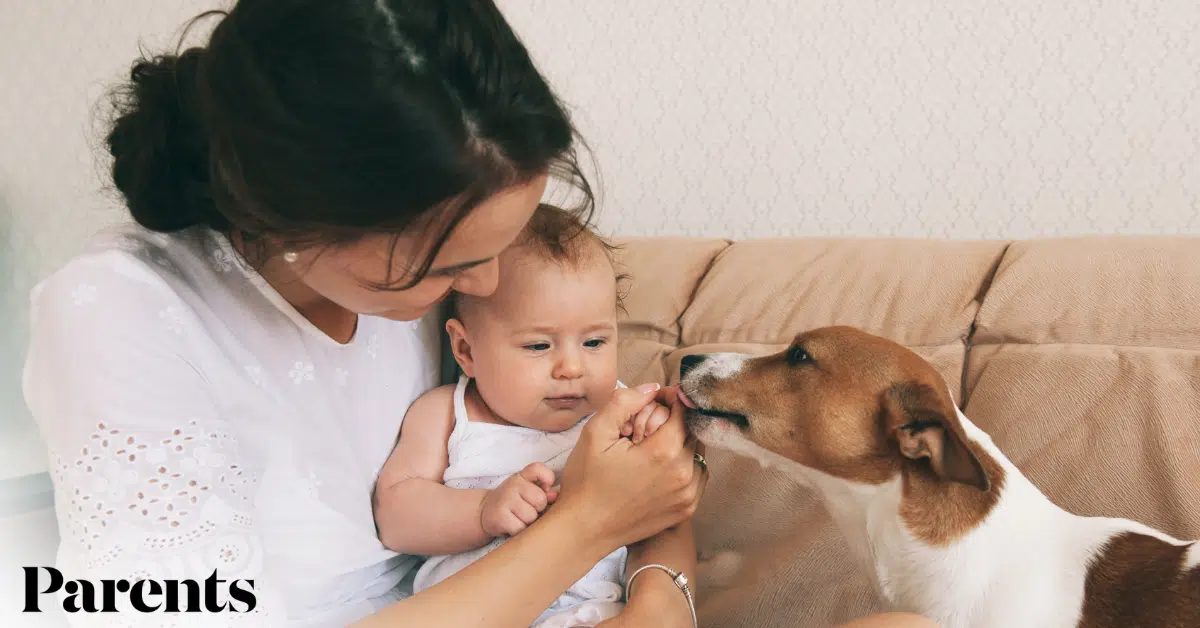
If you’re like most parents, you probably anticipated that it would take some time for your dog or cat to get used to the new baby—as well as the carseats, strollers, bouncy seats, cribs, and other accessories and equipment. But, what you may have been unprepared for is how you would feel about your pet.
In fact, you may be downright shocked to discover that you actually feel a lot of resentment toward your pet—the little things you used to find adorable about them, just get on your nerves now. But, rest assured that you’re not alone. There are lots of parents online who are struggling with the very same thing.
Here’s what mental health professionals and pet experts have to say about why new parents have a pet aversion postpartum and what you can do about it.
Why This Happens
When a baby enters the household, life transforms almost overnight, says Kara Kushnir, MSW, LCSW, PMH-C, a family therapist, clinical director, and founder of A Work of Heart Counseling. From an emotional standpoint, you may experience a nuanced range of emotions from protectiveness and exhaustion to nerves and vulnerability. You’re learning how to balance caring for a baby and yourself, which can make the caregiving tasks emotionally charged, she says.
“Logistically, the household’s operations shift and the schedule is ever-evolving—disrupted sleep, constant feedings, managing baby gear, and adapting to what needs to be done,” says Kushnir. “Time and energy once available for pet care are now often consumed by the demands of infant care.”
Resentment also can easily creep in, she says, especially if your pet disrupts your infant’s sleep, has issues controlling their bowels, or if caring for their needs become an extra to-do list item rather than a source of enjoyment.
“Likewise, detachment can occur, often unintentionally, as new parents’ have limited tolerance for extra stimuli and demands,” says Kushnir. “Pets can grow to be more of a chore than a source of companionship and enjoyment. They can even become a stressor if the pet isn’t child or baby friendly in demeanor.”
Biology Plays a Role, Too
Pregnancy and the postpartum period trigger profound neurological and hormonal shifts, says Sogand Ghassemi, MD, a child, adolescent, and adult psychiatrist at PrairieCare. “Levels of oxytocin, often called the bonding hormone, increase significantly and facilitate attachment behaviors toward the infant.”
According to Dr. Ghassemi, functional MRI studies show changes in regions of the brain responsible for empathy, emotional regulation, and reward processing during this time.1 She says these adaptations make you more attuned to your baby’s needs; but they may also temporarily reduce your emotional bandwidth for other relationships, including pets.
“These changes are biologically adaptive, not indicative of a lack of love for the pet,” says Dr. Ghassemi. “While these neurobiological shifts prioritize infant-related stimuli, they do not erase preexisting bonds. However, under stress, your brain’s attentional and emotional resources may become disproportionately allocated to infant care, resulting in reduced emotional availability for others, including pets.”
Also, your pet’s clinginess, anxiety, or aggression adds to the already growing list of daily responsibilities for you to handle, which can lead to increased emotional responses from you, she adds. “This can create tension in your home, and even more so for [moms] experiencing perinatal mood and anxiety disorders (PMADs).”
“Under stress, your brain’s attentional and emotional resources may become disproportionately allocated to infant care, resulting in reduced emotional availability for others, including pets,” said Dr. Ghassemi.
Plus, the strain of managing guilt over harboring resentment for your pet, fear of being a ‘bad’ pet owner, and frustration with the changes in household dynamics can exacerbate symptoms of anxiety or depression.2
“Many new parents expect to juggle it all perfectly and when that proves impossible, guilt comes in,” adds Aerial Cetnar, PhD, a licensed therapist and founder of Boulder Therapy and Wellness. “There’s often a grieving process for the ‘old life’ and for the easy bond they once had with their pet. If a pet acts out with barking, regressing in training, [and] showing jealousy it can amplify stress, overwhelm, and disappointment.”
Pet’s Perspective
Bringing a baby home can be a major upheaval for pets, says Alexandra Bassett, CPDT-KA, a certified professional dog trainer, behavior consultant, and owner of Dog Savvy. Some pets become needy and clingy when their environment and routines change. They may seek more attention and need a lot of reassurance, she says. Others retreat from the chaos, isolating themselves from noise and unfamiliar smells, she says.
Bassett says you may also notice:
- Anxiety: This can look like panting, pacing, excessive whining and barking, destructive chewing, or accidents in the house, says Bassett.
- Aggression: You may notice growling or nipping or reactivity like barking or whining excessively, especially if your pet feels threatened or overwhelmed by the baby’s cries, sudden movements, or new rules (like being kept out of certain rooms).
- Guarding: Some pets will display resource guarding, and jealousy, says Bassett. Because they are unsure of their place in the new family dynamic, they may start guarding toys and certain areas from the baby and may have trouble sharing attention. Alternatively, they may start guarding the baby or you from others, she says.
For dogs, learning to read their body language can help avoid any future issues. Getting in tune with your dog’s body language allows you to ascertain if they’re stressed around the baby, says Annie Grossman, a behavior specialist at ASPCA Adoption Center and author of How to Train Your Dog With Love and Science. “Some signs of stress include half-moon eyes, when they are very still and move their eyes so you can see the whites of their eyes in a crescent shape, or licking their lips, yawning, or scratching themselves.”
Grossman says these signs of stress often appear before growling or aggression and are clues that you need to acclimate your dog to the new baby little by little. Try building associations with the new little one (and all of their belongings and smells) incrementally, she says.
“You want to take these warnings seriously and not punish things like growling,” she says. “If you punish a growl, for instance, your dog might skip giving a warning and go straight for a bite.”
Connecting With Your Pet Postpartum
Kushnir suggests creating small pockets of one-on-one time with your pet. This can help you reconnect with your pet again while reassuring them that you still love and care for them. “Even just five minutes a day of undivided attention like snuggling on the couch, brushing, or playing can help rebuild connection.”
For dog-owners, adjusting to these changes may require a bit more effort. A big component of reconnection is based on how you interact with your dog—even when you’re exhausted, says Ali Smith, a professional dog trainer and founder of Rebarkable. Sometimes it’s about carving out some time to focus on them, she says, but other times you may need a professional dog trainer who can guide you on ways of eliminating or decreasing stressors.
Alternatively, you can take your dog to a daycare or hire a dog walker to ensure they’re still getting enough exercise and attention, she says. You can even make it a rule that everyone who visits also plays with the dog or shows it some love.
Ultimately, though, no matter if you have a dog or cat—or both—you need to be patient with yourself and your pet and allow for some adjustment, says Kushnir. “Relationships evolve. Just as you’re adjusting to your new role, your pet is, too. Trust and connection can be rebuilt with time and intention.”
5 Small Ways to Rebuild Trust with Your Pet
Just like humans, pets experience disruption when a new family member arrives, says Dr. Ghassemi. Here are some things she suggests doing to rebuild trust with your pet.
- Ask for help: Enlist help from family, friends, or professional pet services if caring for your pet feels overwhelming. Relieving this burden can reduce guilt and make reconnection more sustainable, she says.
- Start small to create special moments: Look for manageable ways to reconnect, says Dr. Ghassemi. Short walks, five minutes of petting, or tossing a toy while holding the baby all help rebuild trust and show affection.
- Rebuild predictable routines: Try to reintroduce predictable feeding and walking schedules to help reduce anxiety and help them adjust, she says. If you cannot do this on your own, out source to those in your community.
- Include them when you can: Encourage pets to be near during routine baby care (with supervision), she says, to reinforce their inclusion in the new family structure, like while feeding or rocking. This helps your pet feel included, not excluded.
- Use positive reinforcement: Reward calm behavior near the baby with treats and praise to build positive associations, she says.
When Things Don’t Improve
Most people assume that the next logical step is to rehome their pet if things don’t seem to be improving, but most pet experts say that is often a last resort. While it is true, pets can have a difficult time adjusting to the new family member and you can develop some resentment, that doesn’t mean that you have to rehome them, says Valli Parthasarathy, PhD, DVM, DACVB, veterinarian, animal behavior expert at Kinship, and co-founder of Synergy Veterinary Behavior.
“Reach out to your veterinarian or a veterinary behaviorist to address any anxiety or fear that may be contributing to [your pet’s] behavior, and to determine if any underlying medical conditions are coincidentally present,” says Dr. Parthasarathy. “Then, work with an experienced, force-free trainer who can give you strategies to help your pet.”
If you do find that your baby and your pet cannot peacefully coexist, then you may have to consider other options. But this is never an easy choice. “The emotional side of things is often huge,” says Smith. “We bond deeply with our pets, so much so that a recent study found we sometimes grieve for pets more than many family members.”3
If you do decide to find a new home for your pet, Smith suggests asking family and friends first. “I wouldn’t advise private rehoming, as there are a surprising amount of scams surrounding that.”
If you purchased your pet from a breeder, you can also try approaching them to see if they know a good home for them. Lastly, of course, there is a shelter, she says. “If your pet is typically good natured and has no history of aggression, they’ll stand a chance at a no-kill shelter. But, we do always need to be aware there is a possibility.”
Your best option? Give you and your pet time. Keep your baby safe and your pet well-cared for, but try not to make any life-altering decisions until you have exhausted all possibilities.
Originally published on Parents.com