


Anxiety disorders are the most common mental health conditions in the United States. About 1 in 3 children and 1 in 5 adults struggle with anxiety every year, but only a quarter of those people receive appropriate treatment.
Anxiety can take over your thoughts, body, and daily life. It might show up as constant worry, racing thoughts, panic attacks, avoidance, or physical issues like muscle tension and trouble sleeping. If you or someone you love experience these symptoms, you’re not alone.
Cognitive Behavioral Therapy (CBT) is one of the most well-researched treatment approaches for anxiety. CBT helps you understand how your thoughts, behaviors, and physical responses interact, and teaches you practical and sustaining skills to break the cycle. When combined with other appropriate and tailored treatment methods, it’s one of the most effective therapy modalities for anxiety.
What You’ll Learn
- What is CBT?
- How does CBT treat anxiety?
- What types of anxiety can CBT help with?
- What CBT techniques help reduce anxiety?
- What happens during CBT therapy?
Quick Read
Cognitive behavioral therapy (CBT) is one of the most effective treatments for anxiety. It works by helping you recognize how your thoughts, behaviors, and physical stress responses interact and influence each other. Through CBT, you learn to identify anxious thinking patterns, challenge fear-based thoughts, and replace avoidance with healthier coping strategies.
CBT also teaches practical skills to calm the body and regulate the nervous system, such as breathing exercises, grounding techniques, and gradual exposure to feared situations. Over time, these tools can help reduce anxiety symptoms and build confidence in your ability to handle stress.
For many people, CBT is most effective when used as part of a broader treatment plan that may include therapy, medication, family support, or structured programs depending on the severity of symptoms.
What Is Cognitive Behavioral Therapy (CBT)?
Cognitive behavioral therapy is an evidence-based approach to mental health that helps people identify and change unhelpful thought patterns and behaviors. It’s based on the principle that our thoughts, feelings, and behaviors are deeply connected.
When we experience anxiety, it often reinforces our negative thinking, fear, or avoidance, which in turn make the anxiety worse.
Benefits of CBT
CBT helps you:
- Recognize anxious thought patterns, also known as cognitive distortions, such as catastrophizing or worst-case-scenario thinking
- Understand how those thoughts affect your emotions and physical symptoms
- Learn how to navigate, work with, and reframe those thoughts
- Understand how to return to self-compassion and nervous system regulation amidst fear, difficult emotions, an d stressful situations
- Replace avoidance and anxiety spirals with healthier coping behaviors
- Increase confidence and self-trust
Over time, CBT teaches you how to become your own best support system by equipping you with coping skills that you can use long after treatment ends.
How Does Cognitive Behavioral Therapy Work for Anxiety?
CBT addresses anxiety through three core components: cognitive, behavioral, and physical.
Cognitive: Changing Thought Patterns
Anxiety often involves automatic thoughts like imagining worst-case scenarios, assuming you won’t be able to handle something, or thinking you’ll embarrass yourself or be rejected. You’re always on high alert for something bad to happen.
Through cognitive therapy, you learn to identify these thoughts and examine whether they’re accurate, helpful, or fear based rather than based on real evidence. This process, called cognitive restructuring, helps you replace unhelpful thoughts with more realistic and supportive ones, much like you’d speak to a friend experiencing anxiety.
Behavioral: Changing Patterns
Avoidance is one of the biggest drivers of anxiety. While avoiding situations may bring short-term relief, it can teach your brain that those situations are dangerous and amplify fight-or-flight responses.
CBT uses behavioral interventions for anxiety, which can include exposure therapy, which gently and gradually helps you face frightening situations through manageable steps. As you gather more evidence that you’re capable and resilient, your confidence builds, and anxiety feels more manageable.
Physical: Regulating the Body’s Anxiety Response
Like many other mental health challenges, anxiety is a physical experience as well as a mental and emotional one. CBT helps you build a broad skill set to calm the body and return to a regulated state more quickly, rather than staying stuck in a spin cycle. These include:
- Kind self-talk
- Breathing exercises
- Muscle relaxation
- Grounding techniques
- Go-to nervous system regulation strategies, such as going for a walk, laughing with a friend, or petting your dog
- Reaching out for support when you need it
These CBT tools for anxiety help reduce physical symptoms like rapid heartbeat, tension, and restlessness.
Cognitive Behavioral Therapy for Anxiety Disorders
CBT is commonly used to treat multiple different types of anxiety disorders and experiences, including:
- Generalized anxiety disorder (GAD)
- Social anxiety disorder
- Panic attacks
- Obsessive-compulsive disorder (OCD)
- Specific phobias
- Post-traumatic stress disorder (PTSD)
- Health anxiety
- Pregnant and postpartum mental health
It’s also effective for conditions that often occur alongside anxiety, such as depression, sleep disorders, substance use, and eating disorders.
CBT can be used alone or combined with other treatments, such as other therapeutic modalities, medication, family therapy, or group therapy, depending on individual needs.
Effectiveness of CBT for Anxiety
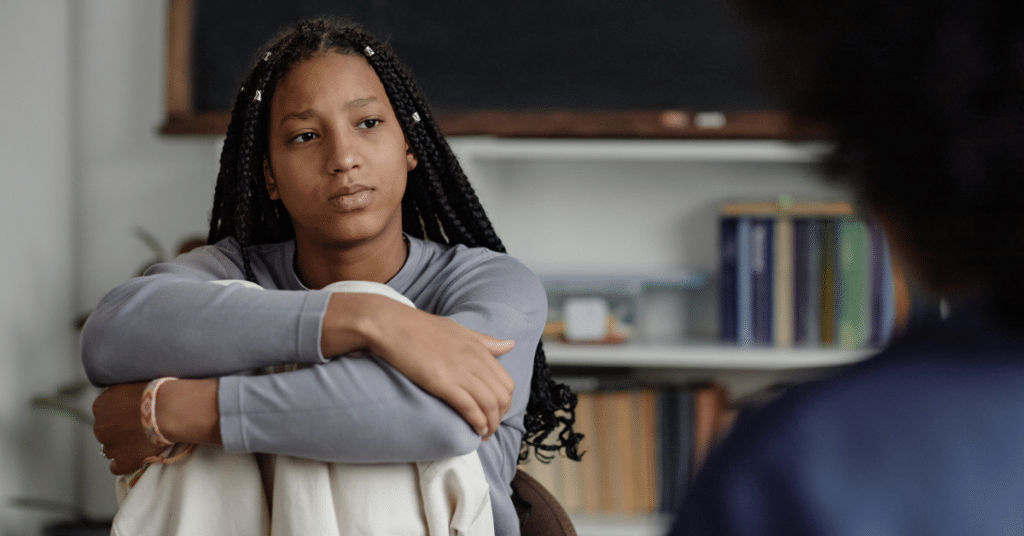
CBT is widely considered a gold-standard treatment for anxiety disorders. Research show that CBT significantly reduces anxiety symptoms and improves long-term mental health outcomes. For people who struggle significantly with anxiety, CBT is a key part of treatment.
However, individual therapy isn’t always enough to single-handedly treat anxiety. Anxiety disorders are complex conditions that often requires treating other issues first or at the same time—such as trauma, depression, and/or OCD.
CBT is most impactful when it’s used as part of a broader treatment plan that includes modalities like:
- Group therapy
- Family therapy
- Medication management
- Experiential therapies to introduce you to healing activities, such as yoga, outdoor activities, and guided breathing
- Higher levels of care when symptoms are severe
Using CBT to Treat Anxiety: What to Expect in Therapy
If you’re considering CBT therapy near you, it’s helpful to know what the process typically looks like.
CBT is a collaborative form of therapy. There’s no set-in-stone structure for sessions; therapy varies depending on your individual needs and goals. However, during sessions, clients can expect to:
- Identify anxiety triggers
- Understand how thoughts and behaviors contribute to anxiety
- Learn CBT strategies for anxiety
- Practice new coping skills in real-life situations
- Learn how to navigate setbacks
- Track progress over time
Over time, many people notice a greater ability to handle stress and an improvement in anxiety symptoms.
5 CBT Techniques for Anxiety You Can Practice at Home
You can practice some CBT exercises for anxiety on your own, even if you aren’t working with a therapist. Here are five things to try.
1. Identify and Challenge Anxious Thoughts
Start noticing anxious thoughts when they arise, and get curious about them. Ask yourself:
- Is this thought based on facts or fear?
- What evidence supports or contradicts it?
- What would I say to a friend in this situation?
This helps interrupt automatic anxiety patterns. Plus, gentle curiosity around your thoughts and sensations helps soothe your nervous system.
2. Practice Gradual Exposure
Avoidance strengthens anxiety, so try taking small steps toward feared situations. For example:
- If social situations feel overwhelming, practice brief interactions
- If you have anxiety and are prone to people-pleasing behavior, practice saying no to trusted friends who will celebrate your boundaries
- If you have a fear of heights, safely stand on a ladder a few feet above the ground for a few minutes every week.
3. Use Grounding Techniques
Grounding techniques, like the well-known 5-4-3-2-1 exercise, help calm anxiety. In the 5-4-3-2-1 exercise, you name 5 things you see, 4 things you feel, 3 things you hear, 2 things you smell, and 1 thing you taste.
You can also just stick with one sense, such as sight. Look around at the room (or outdoor environment) you’re in, moving your eyes around up and down to notice whatever you can:
- What’s the texture of the wall?
- What do the clouds or ceiling lights look like?
- Are there any plants or other soothing objects you can focus on?
- What colors are around you?
This brings your attention back to the present moment.
4. Track Anxiety Patterns
It can be tricky to figure out what makes your anxiety worse, especially if you have GAD or social anxiety, because it can feel like everything is a trigger.
To get a better understanding, keep a record of the instances and situations that trigger your anxiety, fear-based thoughts, and/or intense physical responses. Over time, the patterns will become clearer, and it will be easier to address them before your anxiety escalates.
5. Practice Breathing Exercises
Slow, controlled breathing signals safety to your nervous system. Try Box Breathing: inhale slowly for four seconds, hold for four seconds, exhale for four seconds, and hold again before starting over.
How to Find Professional CBT Therapy for Anxiety
Learning CBT skills takes practice, patience, and guidance. While self-help strategies can be useful, working with a trained therapist provides personalized support and structure.
Look for a therapist who sees and understands you or your loved one, who you’re comfortable with, and who will tailor treatment to you or your loved one’s history and needs.
Consider asking providers these questions during consultations:
- How do you approach therapy?
- Are you a provider who will give me input and feedback, or are you more of a quiet listener?
- Do you have experience with anxiety in [age group]?
- Have you worked with people who share my identity/sexuality/cultural background? Or know someone who has?
- What does a typical session look like?
In addition, think about whether one-on-one therapy is enough for you or your loved one. When someone is struggling significantly in everyday life, they may need more robust support than outpatient therapy alone can provide.
Anxiety Treatment at PrairieCare
At PrairieCare, we understand that anxiety affects every person differently. That’s why we provide comprehensive, individualized anxiety treatment using evidence-based approaches, including cognitive behavioral therapy.
Our programs support people of all ages, through a full continuum of care:
- Clinic services
- Intensive Outpatient Programs (IOP)
- Partial Hospitalization Programs (PHP)
- Residential treatment
- Inpatient hospitalization
PrairieCare’s services and programs include skill-building and psychoeducation, psychiatric medication management, individual and group therapy, family therapy and involvement, and experiential therapies, such as art therapy, depending on the level of care.
Our goal is to help you or your loved one develop lasting skills to manage anxiety and improve overall well-being.
Contact PrairieCare Today
If you or your loved one is struggling with anxiety, PrairieCare is here to help. Our team will walk you through the next best steps for your family and help you understand your options.
Contact us today at 952-826-8475 to learn more. You can also request a screening using the button below.

FAQs
What is CBT and how does it work?
- CBT is an evidence-based therapy that focuses on the connection between your thoughts, feelings, and behaviors. It works by helping you recognize unhelpful thinking patterns, develop healthier coping strategies, and gradually reduce anxiety through skill-based techniques.
How does Cognitive Behavioral Therapy help with anxiety?
- Cognitive Behavioral Therapy helps you identify anxious thought patterns, challenge fear-based thinking, and replace avoidance with healthier coping behaviors. Over time, CBT retrains your brain and nervous system to respond to stress in calmer, more balanced ways.
Does CBT help with anxiety?
- Yes. CBT is a well-researched treatment for anxiety disorders and has been shown to reduce symptoms, improve daily functioning, and provide long-term coping skills that you can use independently.
What are CBT techniques for anxiety?
- Common CBT techniques include cognitive restructuring (challenging anxious thoughts), exposure therapy (gradually facing fears), grounding exercises, breathing techniques, and tracking anxiety triggers. These tools help reduce the mental, emotional, and physical symptoms of anxiety.
What are CBT exercises for anxiety?
- CBT exercises include identifying, getting curious about, and reframing anxious thoughts, practicing self-compassion, engaging in gradual exposure to feared situations, using grounding techniques like the 5-4-3-2-1 exercise, tracking anxiety patterns, and practicing slow breathing. These exercises help regulate your nervous system and build resilience.
Can I do CBT therapy on my own?
- You can practice CBT exercises on your own, such as challenging anxious thoughts and using grounding or breathing techniques. However, if anxiety significantly impacts your daily life, working with a trained therapist provides additional guidance, structure, and support.