


LGBTQ+ youth face the same challenges that all teens grapple with during this time of life. They must also cope with an additional set of challenges. All too often, LGBTQ+ teens are subjected to discrimination and a lack of acceptance from close family members as well as society at large. In fact, 75 percent of LGBTQ+ youth have experienced discrimination at least once during their life as a result of their sexual orientation or gender identity. Learning how to support LGBTQ+ youth is essential for anyone who works with or on behalf of young people.
As a result of these challenges, statistics on the mental health of LGBTQ+ youth show high rates of depression, anxiety, and stress. Close to three-quarters of LGBTQ+ teens experience symptoms of anxiety, and nearly two-thirds suffer from depression. Moreover, Native/Indigenous, Asian American Pacific Island (AAPI), Black, Latinx, and multiracial LGBTQ+ teens encounter multiple obstacles due to their intersectional identities. LGBTQ+ young people are more than four times as likely to attempt suicide as their peers.
Key Takeaways
- LGBTQ+ teens face external challenges such as stigmatization, prejudice, and rejection by family.
- As a result, their rates of anxiety, depression, and suicide attempts are higher than the national average among teens.
- Parents and other family members can make a meaningful difference in an LGBTQ+ teen’s life by respecting pronouns, trusting they know who they are, and ensuring they find gender-affirming spaces.
- Gender-responsive, culturally competent mental health services can help teens build the coping skills and resilience that support them to thrive and be their true selves.
New Statistics on Mental Health in LGBTQ+ Youth
A 2024 Trevor Project survey of 18,000 LGBTQ+ youth aged 13 to 24 yielded statistics on LGBTQ+ youth mental health. Here is a sampling of the findings.
- 39 percent of LGBTQ+ teens seriously considered suicide during the past year, including 46 percent of transgender and nonbinary young people.
- 12 percent made a suicide attempt
- 49 percent of LGBTQ+ young people experienced bullying
- 60 percent felt discriminated against due to their sexual orientation or gender identity
- 66 percent of LGBTQ+ teens experienced symptoms of anxiety in the past year.
- 53 percent experienced symptoms of depression.
- 84 percent of LGBTQ+ youth wanted mental healthcare in the past year, but half of those youth were unable to access care.
Furthermore, statistics from the Substance Abuse and Mental Health Services Administration (SAMHSA) and the CDC’s Youth Risk Behavior Surveillance Survey show that LGBTQ+ teens have a higher risk of substance use than their peers. LGBTQ+ high school students use alcohol at 25 percent higher rates than their peers.
They are also significantly more likely to report recent alcohol and marijuana use. In addition, LGB teens report using cocaine, ecstasy, meth, and heroin at triple the rates of their peers.
10 Ways to Provide Support for LGBTQ+ Teens
As we have seen, the statistics on LGBTQ+ mental health are devastating. Individuals and society need to work toward greater awareness and understanding of the challenges these teens face. Parents, guardians, teachers, professors, school psychologists, guidance counselors, and other adult mentors play a crucial role in providing support for LGBTQ+ teens.
If you’re wondering how to support LGBTQ+ youth, here are 10 ways to make a positive difference.
1. Trust that they know who they are
In the Trevor Project’s 2024 survey, 88 percent of LGBTQ+ youth said that “trusting that I know who I am” was one of the top 10 ways that people in their life could best show their support and acceptance. That means not asking your teen if they’re “sure” about their pronouns, and not saying that you think it’s “just a phase.”
Research from the University of Texas at Austin found that parental support (or lack of support) makes a significant impact on the mental health of young people who identify as LGBTQ+. More specifically, LGBTQ+ youth who felt acceptance and support from their parents or caregivers were less likely to suffer from depression. Family acceptance can save an LGBTQ+ teen’s life. Trevor Project research shows that youth who experience low to moderate support from family are nearly three times as likely to attempt suicide as those who have high support (16 percent vs. 6 percent).
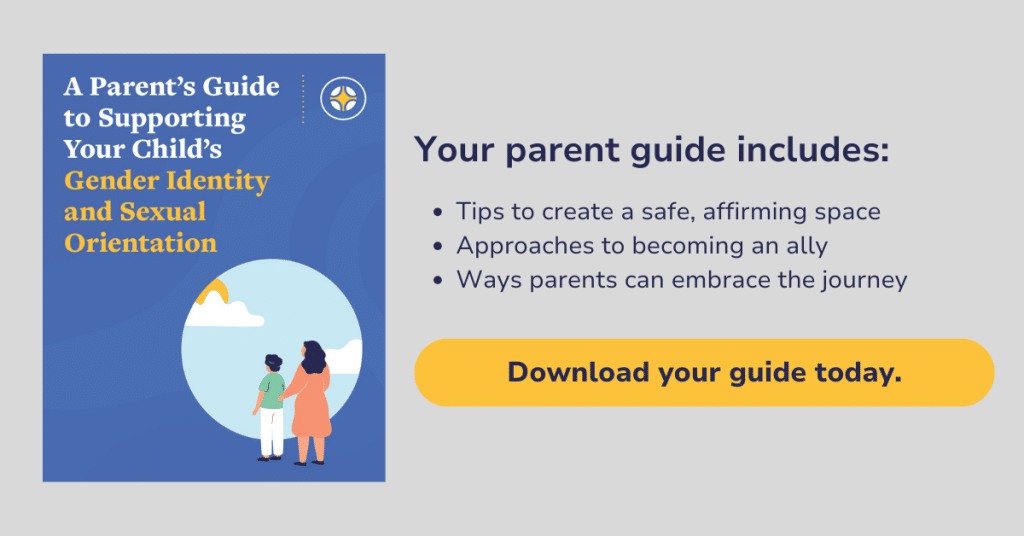
2. Offer unconditional love
First and foremost, the best way for parents to offer help for LGBTQ+ youth is to show them through both words and actions that you love and accept them exactly as they are. Moreover, you will always be there for them no matter what. LGBTQ+ teens suffer most, both psychologically and in terms of physical safety, when they experience rejection by loved ones. Between 20 and 45 percent of homeless youth in the United States identify as LGBTQ+. And most of them have left home or been kicked out due to family rejection.
3. Use the correct pronouns
It may not feel natural at first to use your teen’s new pronouns or new name. However, doing so is proven to support their well-being. Trevor Project research shows that transgender and nonbinary youth whose pronouns are respected by the people they live with were half as likely to attempt suicide as those whose pronouns were not respected. Moreover, trans and nonbinary youth who have access to gender-affirming clothing, such as binders or shapewear, also have a lower suicide risk. It’s okay for parents to feel some sadness or resistance to these changes. But don’t let those emotions keep you from respecting your child’s decisions and helping them move forward.
International Pronouns Day, which began in 2018 and takes place on the third Wednesday of October each year, seeks to make respecting, sharing, and educating about personal pronouns commonplace. Here are some ways to participate:
- Use the #PronounsDay hashtag.
- Post your pronouns on social media.
- Encourage your organization or school to make pronouns an optional field in student and personnel records.
- Distribute information about pronouns on small cards (such as postcards or business cards) to other students or include it in HR materials.
- Put your pronouns on your business cards and email signatures, and encourage others to do the same by making it easy for them. For example, consider making it a drop-down or fill-in option when requesting business cards.
4. Welcome their romantic partners
Navigating teenage love and relationships as a parent can be tricky, regardless of your teen’s gender identity and sexual orientation. But it’s important to accept your child’s partner without judgment or negativity, even if their new romantic interest isn’t who you imagined they’d be. Validate and celebrate their relationship as the special and unforgettable experience it is.
That said, it’s also essential to protect your teen from toxic relationships. Watch for signs that indicate your teen isn’t being treated right in their romantic relationship, including:
- Their partner tries to control their behavior
- One or both teens act extremely jealous and overprotective
- Unexplained bruises or injuries
- Withdrawing from friends and family and spending time only with the new partner
- Frequent arguments between the couple or between the teen and the parent
If you notice these indicators, it’s your responsibility to protect your teen. Explain clearly and calmly why you feel this is an unhealthy dynamic. Assure them that it has nothing to do with their sexual orientation, only with their well-being and safety.

5. Keep communication lines open
In the survey, 42 percent of LGBTQ+ teens didn’t seek mental healthcare because they were afraid to talk about their mental health concerns with someone else. Don’t be afraid to ask questions and try to learn more about what’s happening in your teen’s life. They may push you away or offer a monosyllabic answer at first. But don’t let that deter you. Your teen needs to know that you are interested in what they’re going through.
It’s also important to stay attuned to your teen’s daily experiences because LGBTQ+ youth are at higher risk of bullying and victimization. If you suspect your teen is being bullied, reach out to school administrators or the guidance counselor immediately.
6. Connect your teen with LGBTQ+-affirming communities
This is one of the most crucial aspects of supporting LGBTQ+ youth. Accessing resources for LGBTQ+ teens, including supportive communities, can be life-changing. Youth who have access to LGBTQ+ support services and affirming spaces and communities are much less likely to think about or attempt suicide.
Learn about support systems and LGBTQ+ youth organizations available to your teen at school and in your local community. CenterLink offers a directory of LGBTQ+ community organizations. The Trevor Project has created TrevorSpace, an affirming online community designed to support the mental health of LGBTQ+ youth.
7. Educate yourself
Another vital way to support LGBTQ+ teens is to take the time and effort to educate yourself about LGBTQ+ identities. It’s not your teen’s responsibility to explain what their pronouns mean, or to prove to you the challenges they face due to their gender identity. Show them you care by seeking out the information on your own. The Trevor Project website has a Resource Center where you can search for topics and browse articles, research, and guides.
8. Seek out media that centers LGBTQ+ people
According to The Trevor Project, 89 percent of LGBTQ+ youth report that seeing LGBTQ+ representation in TV and movies makes them feel good about being LGBTQ+. They also feel a sense of pride in seeing musicians, athletes, and other celebrities come out as LGBTQ+. Help your teen find books, movies, music, and TV that feature LGBTQ+ protagonists.
9. Become an activist
Look for groups for the families of LGBTQ+ teens and get involved. Learn more about policies in your state and in the country that may be enhancing or detracting from LGBTQ+ mental health and wellness. Work toward making positive change at the local or national level through organizations like the Human Rights Campaign. PFLAG offers a roundup of ways to provide support for LGBTQ+ rights. Flying a pride flag outside your house can be a powerful way to show that you’re an ally.

10. Make sure your teen gets the mental health support they need
Because LGBTQ+ teens are especially vulnerable to anxiety, depression, and suicide, they may need the support of a mental health professional. The Trevor Project offers crisis counseling for LGBTQ+ youth. To provide ongoing support for LGBTQ+ teens, look for a therapist, outpatient program, or residential treatment that provides culturally competent LGBTQ+ mental health services.
If you’re unsure where to start, call PrairieCare at 952-826-8475 for information on finding a therapist or treatment program. We’ll help you take the next step to ensure that your child receives the support they need to develop resilience, self-acceptance, and a genuine connection with their family and community.
Access Mental Support in Minnesota
PrairieCare’s approach to treatment considers the unique needs of LGBTQ+ people, providing them with tools to navigate the world, build self-worth, and form strong relationships with peers, mentors, and their broader community. With a full continuum of mental health services for all ages, PrairieCare can help people across Minnesota get the quality care they deserve.
Our clinical experts and care staff have expertise in addressing the specific mental health challenges that LGBTQ+ youth face. As a division of Newport Healthcare, we partner with the Trevor Project, the nation’s foremost LGBTQ+ advocacy and research organization, to provide specialized training for our staff.
To get started, call our team at 952-826-8475 or learn more here. You can also request a no-cost mental health screening by clicking the button below and filling out the form on the right. Our team will then contact you within one business day.

Sources
- The Trevor Project, 2024 US National Survey on the Mental Health of LGBTQ+ Young People
- Child Development. 2023 Feb.
- Youth Risk Behavior Surveillance Report
- Pediatr Clin North Am. 2016 Dec; 63(6): 1011–1025.