

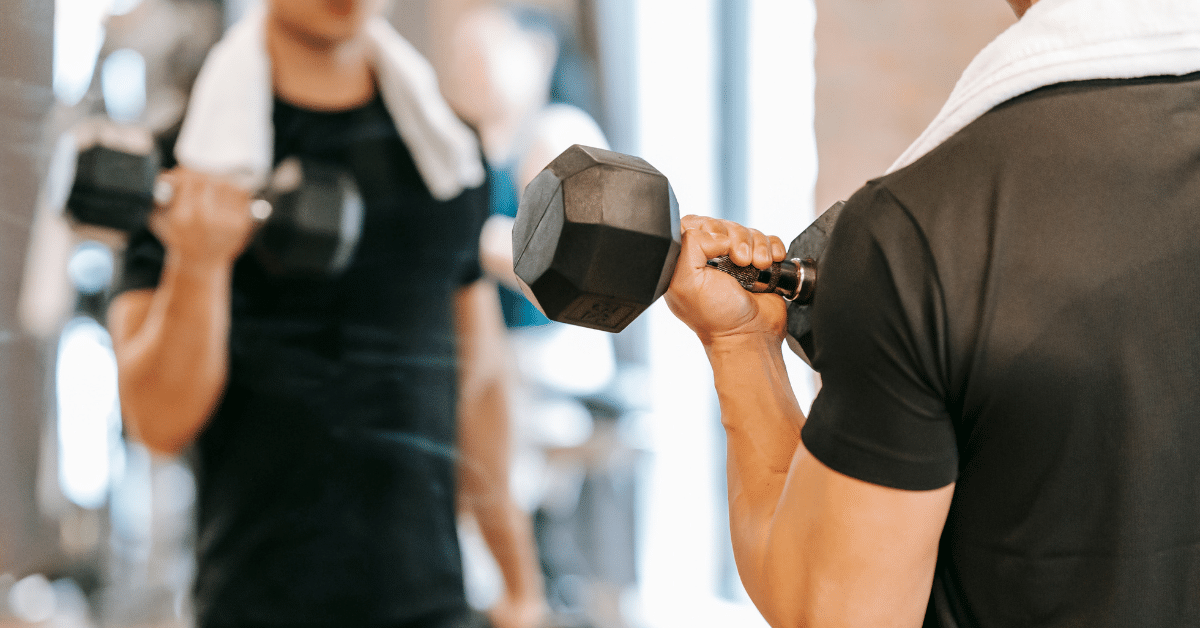
Advertisers and the mainstream media have long played a powerful role in establishing unrealistic “ideal” body standards. Until recently, the focus was on how Photoshopped images and toys like Barbie dolls produce a “drive for thinness” in girls and women. Over the last several decades, however, the muscular male ideal has become prominent.
This extreme drive to achieve a muscular physique can lead to a condition known as muscle dysmorphia or bigorexia. Teens with bigorexia, which primarily affects boys and young men, are obsessed with bodybuilding and getting lean and muscular.
What Is Bigorexia?
Someone with muscle dysmorphia, or bigorexia, believes that they are small and skinny, despite being typically or even unusually muscular. They compulsively work out and control their diet to increase their muscularity. Like other forms of behavioral addiction, muscle dysmorphia is regarded as a type of obsessive compulsive disorder. Obsessive bigorexia, more formally known as muscle dysmorphia, is a form of body dysmorphia that focuses on muscle obsession. (The term dysmorphia comes from the Greek word for “misshapenness” or “ugliness.”)
Criteria for Obsessive Bigorexia
While bigorexia most often develops in late adolescence, symptoms can emerge with the onset of puberty. Bigorexia is associated with anxiety and depression, substance abuse (specifically the use of anabolic steroids), eating disorders, and problems with school, work, and relationships. The most recent edition of the Diagnostic and Statistical Manual of Disorders lists the following criteria for bigorexia:
- A preoccupation with the idea that one’s body is not lean and muscular enough
- Long hours spent lifting weights
- Excessive attention to diet
- Frequently misses important social, occupational, or recreational activities that would interfere with a workout schedule or dietary plan
- Avoids or becomes anxious about situations where their body might be exposed to view by others
- The preoccupation causes a degree of distress that interferes with relationships or responsibilities
- Continuing to work out, diet, or use performance-enhancing substances even when they know it could cause them harm. (For example, a teen with bigorexia might continue working out even with an injury because the muscle obsession is so strong.)
Is Muscle Dysmorphia a Big Problem?
How big a problem is this form of teen boy body dissatisfaction? Bigorexia statistics are difficult to quantify. The disorder is thought to afflict somewhere around 2 percent of people. However, many more teen boys may suffer from undiagnosed muscle dysmorphia. Research shows that 25 percent of adolescent males are worried about not having enough muscles. One study of 149 boys ages 11–18 found that close to one-third were dissatisfied with their body shape.
Other research indicates that muscle dysmorphia is more prevalent in males who engage in sports that emphasize increased muscle mass or power gain, such as teen weightlifting or bodybuilding. Research has indicated that up to 54 percent of competitive bodybuilders and 13 percent of men in the military suffer from muscle dysmorphia.
Moreover, a study found that young adults who had adverse childhood experiences prior to 18 had a greater chance of developing muscle dysmorphia. The study notes the adverse experience likely threatened the young male’s masculinity. Because being big and muscular is associated with masculinity and power, they have an extreme drive to achieve this body ideal.
How Social Media Influences Male Muscle Dysmorphia
A study of the evolution of male action figures over 30 years found that they had grown much more muscular over time. Video game avatars and hyper-realistic CGI animation techniques take muscularity to new extremes that are not humanly possible.
Social media can also heighten a teen boy’s vulnerability to body dissatisfaction, eating disorders, and bigorexia. The highly visual nature of Instagram and Snapchat reinforces body image sensitivity. One study found that the most frequently depicted male body type on Instagram is lean and muscular.
The apps also provide near-constant opportunities for teen boys to compare themselves with filtered and curated images of both celebrities and peers. “#Fitspiration” images featuring beautiful people doing exercise are particularly damaging. “Before and after” pictures give the impression that an ideal is attainable through diet or exercise. In fact, the media-driven ideal body is not physiologically possible for most people.

Reducing Social Media Time Can Help
Recent research by the American Psychological Association found that teens and young adults who reduced their social media use by 50 percent for just a few weeks saw significant improvement in how they felt about their weight and their overall appearance. This was compared with peers who maintained consistent levels of social media use, and saw no significant change in body image. Gender did not appear to make any difference in the effects.
“Social media can expose users to hundreds or even thousands of images and photos every day, including those of celebrities and fashion or fitness models, which we know leads to an internalization of beauty ideals that are unattainable for almost everyone, resulting in greater dissatisfaction with body weight and shape,” said the study author, Gary Goldfield, PhD, Children’s Hospital of Eastern Ontario Research Institute.
Male Celebrities Talk Body Image
Some male celebrities are opening up about their struggles and the pressure they feel to have the “perfect” body. To maintain his buff lifeguard body on the ‘90s series Baywatch, Zac Efron told Men’s Health he took diuretics, overtrained, ate the same three meals every day, and wasn’t sleeping enough. “That Baywatch look, I don’t know if that’s really attainable. There’s just too little water in the skin. Like, it’s fake; it looks CGI’d,” he told the publication.
In an interview with Cosmopolitan, actor Justin Baldoni, best known for his role on Jane the Virgin, opened up about his struggle with body dysmorphia. His TedTalk “Man Enough,” in which he discusses toxic masculinity, has garnered over 8 million views.
“I think the actual thing, if I were to be clinically diagnosed, would be muscle dysmorphia,” Baldoni told Cosmopolitan. “No matter what I do, I never feel like I’m strong enough, or muscular enough or big enough, and that comes down to being the super skinny kid that was picked on and bullied. It’s basically a misperception of the way that I look at myself compared to the way the world sees me.”
10 Signs of Disordered Eating or Muscle Dysmorphia in Teens
How can a parent distinguish the difference between normal teen boy body dissatisfaction and a disordered obsession with food, eating, or working? According to the International OCD Foundation, warning signs can include the following behaviors:
- Preoccupation with body image, body size or shape, a specific part of the body, and weight
- Significantly limiting the variety of foods consumed by restricting entire food categories
- Performing specific rituals around food intake, and having a rigid eating schedule
- Excessively working out or lifting weights, to the point that it disrupts schoolwork and other activities
- Counting calories and tracking nutrient content to achieve a “perfect” formula
- Avoiding social gatherings or eating out due to perceived lack of control over food content
- Excessively checking mirrors or other reflective surfaces—or avoiding mirrors
- Staying away from social situations where bodies may be on display, such as the beach or pool
- Wearing multiple layers of clothing to appear more muscular
- Using anabolic steroids or other appearance- and performance-enhancing drugs
Body Image and Identity Formation in Teens
Adolescence is when the teen physique is evolving dramatically, thanks to biological changes. This occurs when teens’ psychology makes them keenly sensitive to the perceptions of others. Body image is a core component of identity formation, the critical process of adolescence by which individuals develop a clear sense of who they are.
Body image is more than what you see when you look in a mirror. Rather, it is an interplay of many elements, including:
- Thoughts and beliefs about body shape and appearance, which are influenced by family, peers, and the culture at large
- Perception of body size, shape, and weight, which may not accurately match actual appearance
- Feelings of satisfaction or dissatisfaction about one’s body in comparison to an internalized ideal body image
- Behaviors that reinforce those thoughts, perceptions and feelings, such as frequent mirror checking or avoidance of social situations in the case of muscle dysmorphia.
A healthy adolescent may experience episodes of preoccupation with their bodies. But for a teen with bigorexia, or other types of body dysmorphia, body image becomes the central feature of their self-esteem, to the exclusion of other interests and values.

What Parents Can Do to Protect Against Teen Muscle Dysmorphia
There are many influences outside a parent’s control that contribute to the likelihood that a teen boy will develop eating disorders and/or bigorexia. But parents can do a lot to nurture their child’s self-esteem, support a more nuanced concept of masculinity, and model healthy behaviors.
Look for signs of bullying
The long-term health risks of bullying can include body image and self-esteem issues, disordered eating or eating disorders, and/or bigorexia. Bullying can also lead to other mental health issues.
Limit social media
Setting boundaries around the use of social media can help prevent eating disorders and bigorexia, as well as a wide array of other negative impacts.
Educate your teen about the issue
Let them know that teen boy body dissatisfaction is common, and they are not alone. Explain how media and social media can make body image issues worse.
Stay connected and listen
Get curious about your child’s thoughts and feelings about their appearance and their ideas about masculinity. Check out these tips for talking to teens.
Check your own attitudes and behaviors
We all have internalized, often unconscious, beliefs about body image and masculinity. Your child will notice how you talk about your own appearance, or comment on other people’s.
Teen Mental Health Services in Minnesota
If you notice that your teen has developed signs of bigorexia, don’t dismiss it as vanity, “healthy” eating, or self-consciousness. If their obsession with food, weight, and/or working out is negatively impacting their daily activities, it’s time to get a mental health screening.
At PrairieCare, we address underlying mental health conditions, such as anxiety, depression, low self-esteem, and trauma, that can help young people recover. Our full continuum of teen programs across the Twin Cities, Mankato, and Rochester use tailored treatment plans to ensure each patient gets the care they need to heal and thrive. We help teens build self-esteem and positive self-image through authentic connection—with self, others, and a caring community of peers and mentors.
Start the healing journey today by calling our team at 952-826-8475 to access a no-cost mental health screening, learn about our programs, or have your questions answered. You can also request a screening using the form below, and within one business day, our team will contact you to take the next step. The best time to access care is now. Get started today.
Sources
- Psychology Popular Media. 2023; 10.1037.
- Clin Soc Work J. 2023.
- JAMA Pediatr. 2023 Feb. doi:10.1001.
- Military Medicine. 2016 May. 181: 5.
- Eating Behaviors. 2023 Jan: 48: 101705.
- Int J Environ Res Public Health. 2021 Dec; 18(24): 13222.
- J Adolesc Health. 2021 Oct; 69(4): 615–621.
- Cyberpsychol Behavior Soc Networking. 2020 May; 23(5): 10.1089.
- Californian J Health Promotion. 2019: 17(1): 61–70.