


Treatment for depression, anxiety, trauma, and other mental health challenges takes time and care. Different stages of the healing process may require different levels of care. Therefore, it’s helpful to understand the differences between inpatient vs. residential treatment, and inpatient therapy vs. outpatient care.
Optimal treatment considers an individual’s needs, history, and the severity of their diagnosis. Following an in-depth assessment, experts can recommend the best approach for each phase of treatment. Hence, someone might receive treatment first in a hospital’s inpatient mental health unit, then transfer to a residential setting, be discharged to an outpatient program, and then receive weekly therapy and/or attend support groups.
Given all these options, distinguishing between them can be challenging, let alone understanding what you, your loved one, or a person you care for may need. Let’s examine the various levels of care more closely.
Levels of Care: Outpatient vs. Inpatient vs. Residential
More than 1 in 5 U.S. adults have a diagnosable mental health disorder, such as depression or anxiety, with the highest rates among young adults. Treatment for these challenges is much more likely to be successful when someone is placed in the right level of care, especially as soon as symptoms emerge. The primary levels of care, from less intense to more intensive, include:
- Weekly therapy, online or in person; which may include medication prescribed by a psychiatrist or physician
- Outpatient programming—at an outpatient clinic or community mental health center.
- Residential care—in a homelike setting, for about 90 or more days.
- Inpatient care—in a psychiatric hospital or the psychiatric unit of a hospital, usually for acute care or less than 30 days
There are more subtle differences within those categories. Let’s examine the differences between inpatient and residential treatment and inpatient and outpatient mental health programs.
What’s the Difference Between Inpatient and Residential Treatment?
The main differences between inpatient vs. residential treatment are where it takes place, the length of stay, and the overall treatment goals. Although both treatment settings require patients to stay overnight, they are helpful at different stages in someone’s recovery.
Inpatient Hospitalization
Inpatient treatment involves a stay in a psychiatric hospital or the psychiatric unit of a hospital. Typically, inpatient treatment is for patients who are in the acute stage of a mental health disorder and need continuous support. Inpatient stays often follow an emergency room visit for a suicide attempt or other crisis. The average stay can be three to ten days, but the patient’s needs determine discharge dates. Thirty days is usually the maximum time for inpatient mental health treatment.
Psychiatric hospitals employ both psychiatrists and physicians to treat mental health conditions such as anxiety and depression. Some hospitals provide primary or co-occurring support for specialized care, such as substance use or disordered eating. Generally, inpatient treatment aims to stabilize the patient’s symptoms and ensure they are not a danger to themselves or others.
Following inpatient treatment, patients can continue receiving support in an outpatient setting like a Partial Hospitalization Program (PHP), or patients who require long-term care are often transferred to residential treatment, sometimes referred to as residential inpatient treatment centers. When comparing inpatient vs. residential treatment, it’s helpful to understand that it focuses on long-term healing instead of crisis management. Because patients stay for one to three months in residential care, the focus is to address the root causes of mental health and behavioral issues with support that reflects a home-like setting instead of a hospital.
Immediate Care Option at PrairieCare
If you or a loved one needs immediate care for severe mental health symptoms, we are here for you. Our Family First admissions process allows patients 35 and younger to come directly to our hospital rather than to the ER. Parents and young adults can call 952-826-8424 to talk with our team at any time to get a path to safety and support. Learn more.
Residential Treatment Programs
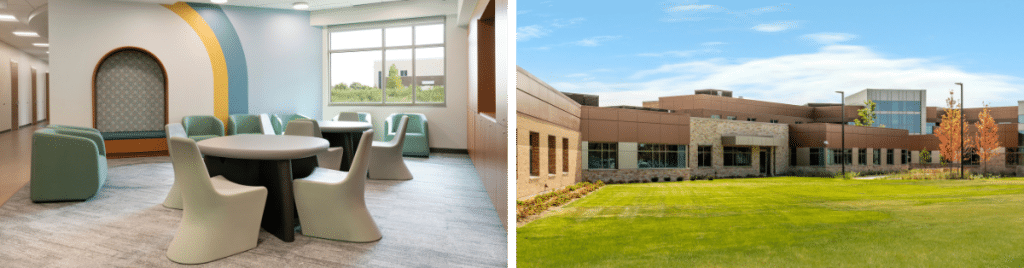
Residential treatment programs are live-in healthcare facilities that provide a structured environment. A residential patient schedule includes clinical care, experiential activities, and academics. While in residential treatment, clients live in a comfortable, homelike setting and are supervised by trained staff. Depending on the program, staff members include psychiatrists, therapists, counselors, nurses, and other specialists, such as dietitians or experiential therapy practitioners.
As we have seen, residential care is usually the next step in a person’s healing journey after inpatient care in a hospital, especially if they have had multiple inpatient stays. However, residential care is also appropriate for outpatient or weekly therapy patients but needs more support than these options provide. Research shows that for young people, residential programs are an effective approach to treating depression, anxiety, substance use, and eating disorders.
According to research, residential treatment is most effective when it takes an integrated approach—addressing all aspects of someone’s well-being, including:
- Relational
- Social
- Educational
- Physical
- Psychological
A review study of 10 years of research examined residential treatment outcomes for children and teens. The researchers found that the best residential treatment provides multiple modalities, such as Cognitive Behavioral Therapy, Dialectical Behavioral Therapy, family therapy, and EMDR. In addition, most teen residential programs include academics. At PrairieCare, our teen residential program takes a whole-person approach, including a structured schedule with clinical therapy, life skills education, and academics.
What’s the Difference Between Inpatient and Outpatient Treatment?
The main difference between inpatient vs. outpatient mental healthcare is that patients live at home while receiving outpatient vs. inpatient treatment that takes place while they are living at a hospital or a treatment center. However, outpatient treatment provides patients with many of the same clinical and experiential modalities they receive at a residential or inpatient facility, but without needing 24/7 from their care team.
Outpatient treatment for mental health conditions varies in the level of structure and the number of hours of programming. Depending on the level of outpatient care, patients may attend school or work and then go to outpatient care in the afternoon. Or they may spend the full day in outpatient care, which includes an educational component. Let’s look at the various options for outpatient treatment.
Partial Hospitalization Programs
Patients in a Partial Hospitalization Program (PHP) live at home and receive treatment all day, five days a week, in an outpatient clinic or sometimes in a psychiatric hospital or the psychiatric unit of a hospital. PHP schedules help people transition from residential treatment or inpatient care to continue their recovery in a structured and secure environment.
A PHP can include:
- Group therapy
- Individual therapy
- Psychoeducational sessions
- Family or couples therapy
- Experiential activities, such as art, music, and Adventure therapy
Intensive Outpatient Programs
Intensive Outpatient Programs (IOPs) are similar to PHPs. But patients attend for fewer hours—three to four hours a day, up to five days a week. Of course, the length of the program can vary depending on the patient’s needs. An adolescent or adult IOP may be part of a hospital’s services or an extension of a residential program.
An Intensive Outpatient Program can include:
- Individual therapy sessions
- Experiential therapies
- Group sessions
- Family and couples therapy
- Psychiatric and medical management
- Therapeutic activities such as yoga, meditation, creative arts, and more
Studies show that intensive outpatient treatment is effective for the underlying issues catalyzing depression, anxiety, substance use, and other mental health and co-occurring disorders. After completing the outpatient program, patients move from the IOP to a less rigorous level of care, such as weekly therapy in a therapist’s office.

Continuing Care After Treatment
Whether someone is in residential, inpatient, or outpatient treatment, continuing care after discharge is essential. Once a patient is on the path of healing, ongoing support and therapy help maintain health and well-being. Below are some options for continuing care.
- Community Mental Health Centers: Many towns and cities have centers that provide therapeutic groups and educational sessions to help people stay in recovery. In addition, some mental health centers offer yoga and meditation classes and other experiential approaches to maintaining mental health.
- Clinic Services: After residential and/or outpatient treatment, people of all ages may work with a mental health clinician. At PrairieCare, we provide clinic services that help establish new, healthy behaviors in a weekly therapy setting for continued support. Furthermore, we offer family and couples therapy support and new ways of connecting and communicating with loved ones.
- Support Groups: Parent, teen, and adult support groups offer encouragement and the wisdom of peers. Some community mental health centers and other community centers offer ongoing support groups.
We’re Here to Help You Find the Right Care
In summary, there are several important differences between inpatient and outpatient treatment and inpatient vs. outpatient mental healthcare. People of all ages can benefit from these various levels of care—inpatient, residential, and outpatient—as they progress through recovery. Ultimately, the right level of care can support people in finding sustainable healing and successfully taking the next steps in their lives.
The first step in finding the right level of care is an in-depth assessment by a mental health expert. PrairieCare offers no-cost mental health screening to anyone seeking care. After a phone call, we can recommend the level of care that would help you or a loved one. Get started by filling out our request form or calling us at 952-826-8475.
PrairieCare’s Continuum of Care in Minnesota
PrairieCare provides people of all ages with compassionate mental health services throughout the Twin Cities, Mankato, and Rochester. We offer a full range of high-quality treatments to support people where they’re at in their mental health journey and to reach their goals. We pride ourselves in guiding individuals with a plan that works for them so they can focus on healing.
Our continuum of care includes:
- Inpatient Hospitalization: A 24/7 care setting with full-day treatment for patients 35 and younger with acute safety concerns and severe mental health symptoms
- Residential Treatment: Full-day inpatient treatment with an average stay of three months, for youth with psychiatric impairment who do not require stabilization
- Partial Hospitalization Program (PHP): Full-day outpatient programming for youth and adults, offering multi-specialty treatment through group, individual, and family therapy sessions
- Intensive Outpatient Program (IOP): Partial-day treatment for youth and adults who are able to participate in regular daily activities but need continued support and structure
- Clinic Services: In-person and telehealth appointments for psychotherapy and medication management, with care options including Transcranial Magnetic Stimulation (TMS), an evidence-based procedure for treatment-resistant depression
If you’re unsure where to start or have any questions, our team is always here to help. Call us at 952-826-8475 to do a no-cost mental health screening, learn about our services, or make a referral. You can also request a no-cost mental health screening sing the form below and our team will call you to take the first step in healing.
Sources:
- US Dept. of Health & Human Services
- Psychiatr Serv. 2014 Jun 1; 65(6):718–726.
- J Child and Family Studies. 2005 Dec;14(4):551–575.