

Anxiety is one of the most common mental health challenges Minnesotans experience. And as with other mental health conditions, stress amplifies the negative symptoms of anxiety. That’s why everyone needs go-to relaxation tools that can bring relief and naturally calm the body and mind.
In addition, relaxation skills can replace unhealthy coping mechanisms, such as substance use and self-harm. Scientists continue to uncover how powerful natural relaxation techniques can be. Therefore, mental health professionals can use them with their patients alongside clinical approaches, such as psychotherapy or medication.
Here we look at techniques to help minimize stress and allow the brain to recalibrate.
The Power of Yoga for Anxiety
How does yoga relieve anxiety? Researchers theorize that yoga’s mindful movement and breathing activate the relaxation response. Therefore, yoga moves us out of the sympathetic nervous system (“fight or flight”) and into the parasympathetic nervous (“rest and digest”) system.
Furthermore, yoga practice increases levels of GABA, the neurotransmitter in the brain that helps relax the mind. In a 12-week study, participants walked or did yoga for an hour three times a week. The yoga group showed greater increases in GABA levels. In addition, they showed more significant improvement in mood and anxiety. As a result, yoga can be one of the most important relaxation skills anyone can learn to utilize throughout their life.
A Yoga Relaxation Exercise
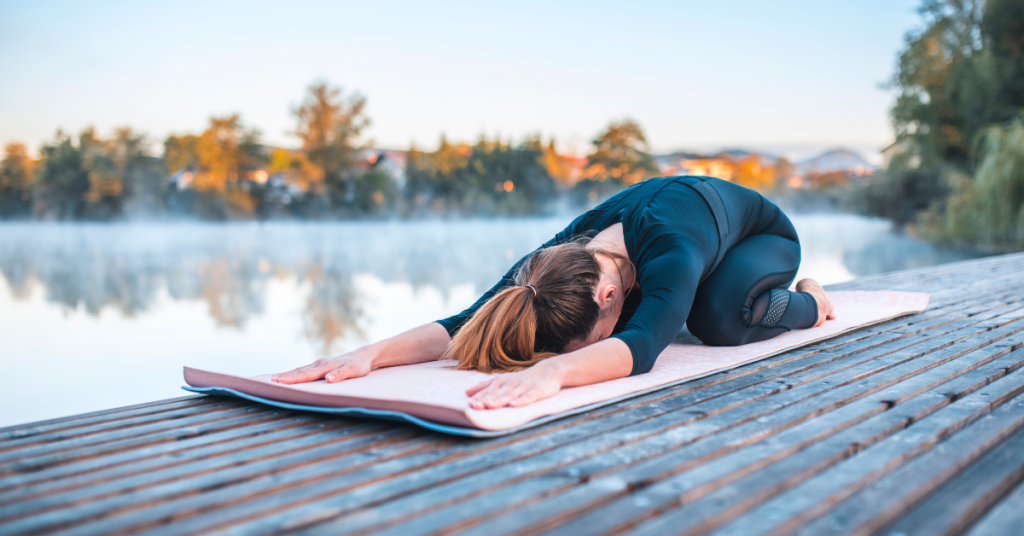
Child’s pose is a simple yoga posture known for its ability to encourage relaxation. It can also be adapted to make it comfortable if you have limited flexibility or physical limitations, such as placing a pillow below your knees or chest. Thus, it is an ideal relaxation skill for almost anyone.
Here’s how to practice Child’s pose:
- From hands and knees, lower your hips toward your heels.
- Spread your knees wide apart while keeping your big toes touching. Soften the belly onto the tops of the thighs.
- Rest your forehead on the floor and rest your torso on your thighs. Knees can be together or apart.
- Extend your arms forward, with palms facing down, or bring them back to rest alongside your thighs, with palms facing up.
- Breathe in for a slow count of five, then breathe out for a slow count of five.
- Stay in the pose for as long as you wish.
The Breath: One of the Most Powerful Relaxation Skills
Conscious, controlled breathing is one of the easiest and most immediate ways to relax the nervous system. Slowing the breath moves us into the relaxation response governed by the parasympathetic nervous system.
Anyone can effectively use a deep breathing exercise to relax before a big event, calm down after feeling upset or stressed, and get to sleep more easily. The best part is that it is a highly accessible self-care technique. Because you don’t need special tools, controlled breathing can be used anywhere and is a free yet effective approach for self-regulation.
Research on Breathing Techniques
Research validates breathing exercises as effective, accessible tools for calming the nervous system quickly. For example, scientists at the Medical University of South Carolina conducted a study by dividing 20 healthy adults into two groups. Next, one group did two sets of 10-minute breathing exercises. At the same time, the other group read a text of their choice for 20 minutes.
During these activities, researchers tested the subjects’ saliva at various intervals. The results showed that the saliva of participants who did the breathing exercise had much lower levels of three specific cytokines (proteins produced by cells), which are associated with stress. As a result, researchers concluded that the breathing exercises produced a measurable decrease in stress.
Square Breathing Exercise for Relaxation
Square Breathing, also known as four-square breathing or box breathing, is a deep breathing exercise that can be a go-to relaxation skill for people of all ages.
- Sit comfortably in a chair, with your feet on the floor and hands in your lap.
- Inhale slowly through the nose for a count of four, allowing the air to fill your belly.
- Hold the breath in for a count of four.
- Exhale slowly through the mouth for a count of four.
- As you breathe, visualize a healing blue or white light washing over your body. Finally, hold the breath for a count of four.
- Repeat the sequence for four minutes.
- Ideally, repeat the exercise for four minutes, four times a day.
- Consequently, practicing Square Breathing several times daily will help teens become calmer and more relaxed.

Research on the Power of Meditation
Research shows that mindfulness-based exercises like meditation help decrease anxiety, depression, and stress. Furthermore, they improve mental health and overall quality of life. Hence, they are an important relaxation technique for people of any age.
A study showed that meditation is more effective than a vacation for improving mental health and increasing relaxation. A total of 90 participants were divided into three groups. The group of experienced meditators went to a meditation retreat. A group that had never meditated also participated in a meditation retreat, and the third group did not participate in meditation. Instead, they listened to health lectures and did fun vacation activities for a week. Afterward, everyone felt more relaxed.
Next, 10 months later, researchers went back to the participants. They found that both the regular and the new meditators still showed significant improvements in anxiety and depression levels. However, the vacationers had returned to the same levels they had shown before the vacation. Therefore, meditation clearly has a powerful and long-lasting impact on one’s mind.
Basic Mindfulness Meditation
Here are directions for an introductory meditation to add to a relaxation toolkit:
- Sit quietly with eyes closed and breathe normally.
- Bring your attention to your breath. Repeat the phrases “breathing in, breathing out” to help keep the mind focused on inhaling and exhaling.
- When a thought comes into your mind, simply label it as “a thought” and allow it to float out of your mind like a cloud moving across the sky.
- Then, gently bring your attention back to your breath. Practice for as long or as short a time as you wish. Even a few minutes of meditation can make a huge difference in your day and your mindset.
Music’s Healing Ability
Scientists have found that rhythm significantly impacts the nervous system. Specifically, simply listening to music has a measurable positive effect on the psychobiological stress system and, therefore, encourages deep relaxation.
Furthermore, research done with depressed adolescents showed that sound therapy shifted their brain activity and levels of cortisol (the “stress hormone”). Researchers concluded that music had relaxing effects on their physiological and biochemical measures. Other studies show that music therapy reduces frustration, anger, and aggression.
Time in Nature Enhances Relaxation
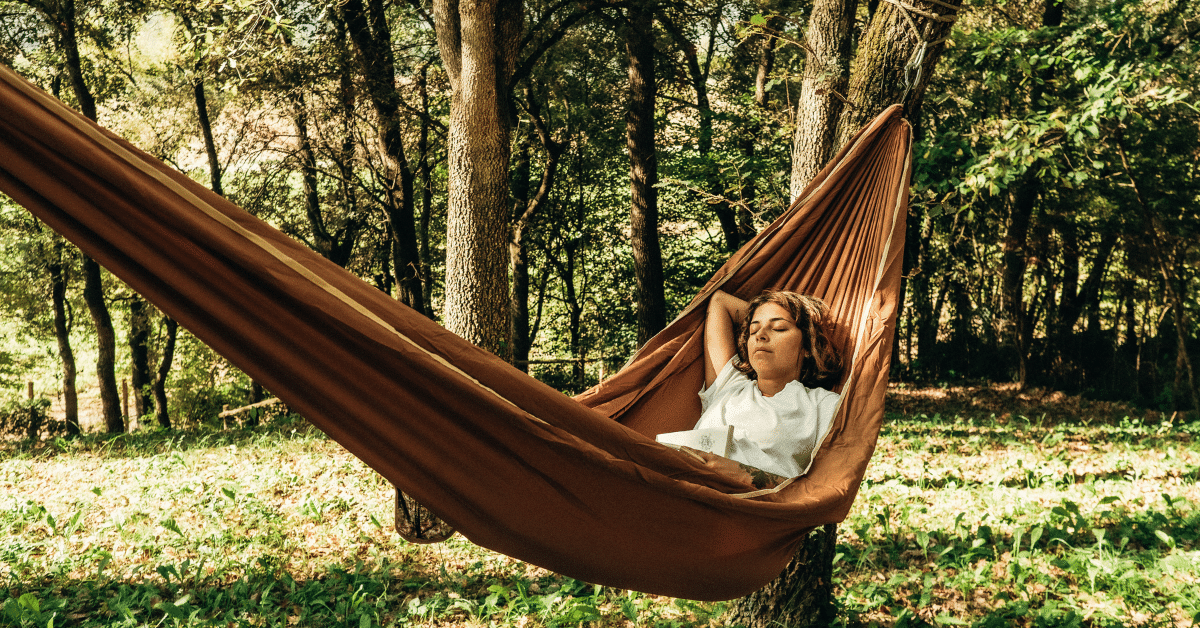
A growing body of research validates that time spent outdoors in nature can be a powerful relaxation technique. This field of study began with forest bathing in Japan. In studies on forest bathing, researchers sent some participants into forests while others were sent to an urban environment. Then they measured participants’ cortisol, blood pressure, pulse rate, and heart rate variability.
As a result, they found that forest environments, as compared to cities, produced lower cortisol, slower pulse rate, lower blood pressure, and more activity in the parasympathetic nervous system.

Positive Visualization Builds Relaxation Skills
Mental imagery and visualization are powerful tools for dissolving physical and mental tension. When someone practices positive visualization, they learn how to regulate their emotions and relieve stress. This can be a highly effective technique at any stage of life.
Body Scan Visualization
- Find a private, calm space and get settled in a comfortable position, seated or lying on your back.
- Close your eyes and take a few slow, deep breaths.
- Imagine yourself in a beautiful location, one of your favorite places. It might be a beach, the woods, or a cozy spot in your home or a loved one’s home.
- Visualize the environment around you. Imagine the sound of the waves, or the rustling of the wind in the trees. Feel the sun’s warmth on your face, or the coolness of the ocean spray.
- Stay in the scene, visualizing every aspect of it.
- Remember that you can return to this place whenever you want or need to relax.
This visualization benefits people when they feel tense, unfocused, or upset. Therefore, it empowers them to practice self-awareness. As a result, they can focus on consciously relaxing the body to calm the mind.
About PrairieCare
At PrairieCare, we provide hope and healing to individuals of all ages through comprehensive mental health services. PrairieCare is one of the nation’s largest providers of premier psychiatric services to the Twin Cities metro area, Rochester, and Mankato. Our programs and services span the full continuum of care, with the understanding that each patient has unique experiences, life stages, and needs.
Sources:
- Med Hypotheses. 2012 May;78(5):571–9.
- J Altern Complement Med. 2010 Nov;16(11):1145–52.
- BMC Complement Altern Med. 2016 Aug 18;16:294.
- Transl Psychiatry. 2016 Aug 30;6(8):e880.
- PLoS One. 2013; 8(8): e70156.