


When a teenager or young adult has a devastating panic attack or is rushed to the emergency room after a suicide attempt, the family is forced to recognize what’s going on and take action. In some cases, a mental health crisis is the first time that parents learn what’s really going on with their child—particularly because young people may hide their emotions due to shame or fear of their family’s reaction.
Mental health stigma affects both children and parents. Kids might be afraid to talk about what they’re experiencing. And parents may not seek care immediately even when they know something is wrong, because they fear their family or child will be seen differently.
However, diagnosing and treating mental health issues in young people early increases the success of treatment, decreases the frequency and severity of future episodes, and reduces the trauma surrounding the episode. For these reasons and more, it is essential to address teen and young adult mental health issues as soon as possible, before a crisis or breakdown can occur.
What Is Considered a Breakdown?
The term “breakdown” is not a medical diagnosis. Also commonly referred to as a “nervous breakdown” or a “mental breakdown,” the term indicates a severe mental event in which a person can no longer function or perform day-to-day activities. The mental health episode may be brought on by significant stressors, such as trauma or loss, or excessive pressure within the school or family environment. Such an episode is often an indication of an underlying mental health condition.
Symptoms of a serious mental health episode vary depending on the person and situation. Some symptoms develop over a long period, while others appear very quickly.
Here are 10 signs that should always be taken seriously include:
- Inability to function in day-to-day activities
- Sleeping excessively or not being able to sleep at all
- Difficulty thinking, concentrating, or speaking coherently
- Auditory or visual hallucinations, including ringing sounds or seeing lights
- Anxiety that interferes with basic functioning
- Non-responsiveness
- Delusions, including feeling indestructible or beyond human
- Psychosis, or complete detachment from reality
- Self-harming behavior
- Suicidal thoughts, plans, or an attempt
If a teenager or a young adult experiences these symptoms, parents or caregivers need to seek immediate medical care to prevent more severe consequences, including loss of life.
PrairieCare offers emergency support at 952-826-8424 to quickly connect you to a screening and access treatment at our hospital or the best care option. You can also request a no-cost mental health screening and a member of our team will reach out to you.
The Importance of Early Intervention in Teen Mental Health
During the adolescent years, the brain undergoes extensive changes, making teens more vulnerable to mental illness. Hence, if severe symptoms are allowed to develop, the episode will have a greater impact on long-term social, behavioral, emotional, and intellectual development. In addition, a severe mental health episode often requires hospitalization, increasing the level of trauma surrounding the episode.
More treatment options are available in the early stages of a teen mental health crisis, and early intervention can decrease the number and severity of future mental health episodes. Moreover, because half of all mental health disorders start by age 14, teens are in a high-risk group, and early intervention can make all the difference for their future.
Connecting your teen to mental health treatment also puts them in a better position to thrive in college or their career. For example, college life introduces new environmental stressors such as academic demands, moving away from family, and financial struggles, which can make their mental health symptoms significantly worse. Accessing treatment as a teenager helps them gain coping skills and stress management techniques before a major life transition.
Education, awareness, and early intervention in a mental health episode can provide a higher quality of life for your child now and to reach their goals in the future.
Additional Warning Signs of a Mental Health Crisis
Parents, caregivers, teachers, and other adults responsible for children, adolescents, and young adults can easily overlook many warning signs. Some of the most common symptoms include:
- Excessive worrying, fear, or anxiety
- Severe changes in sleep patterns
- Frequent nightmares or night terrors
- Severe changes in appetite
- Feeling “flat,” displaying less interest or emotions than usual
- Extreme mood changes, including periods of euphoria or exaggerated silliness
- Hyperactivity or inability to focus
- Periods of increased recklessness, clumsiness, or decreased ability to concentrate
- Extreme or uncharacteristic irritability or anger
- Avoiding friends, family, or social activities
- Having low energy or minor unexplained health problems like headaches, sore throat, aches, or gastrointestinal problems
- Sudden changes in behavior or use of substances
- Excessive concern about weight or appearance
- Significant changes in school performance, interests, hobbies, or friends
While many of these symptoms can seem like typical behaviors for young people, the key is noticing when they last more than a few weeks or months, especially if the symptoms worsen with time. For parents, the most important thing is to remember to follow your gut. When parents can avoid getting caught up in mental health stigma or denial and seek treatment early for their loved ones, it can be life changing or even life saving for their children.
If you or someone you love is experiencing suicidal thoughts, go to the nearest ER or call the National Suicide Prevention Lifeline at 988.
Immediate Care and Safety at PrairieCare’s Hospital
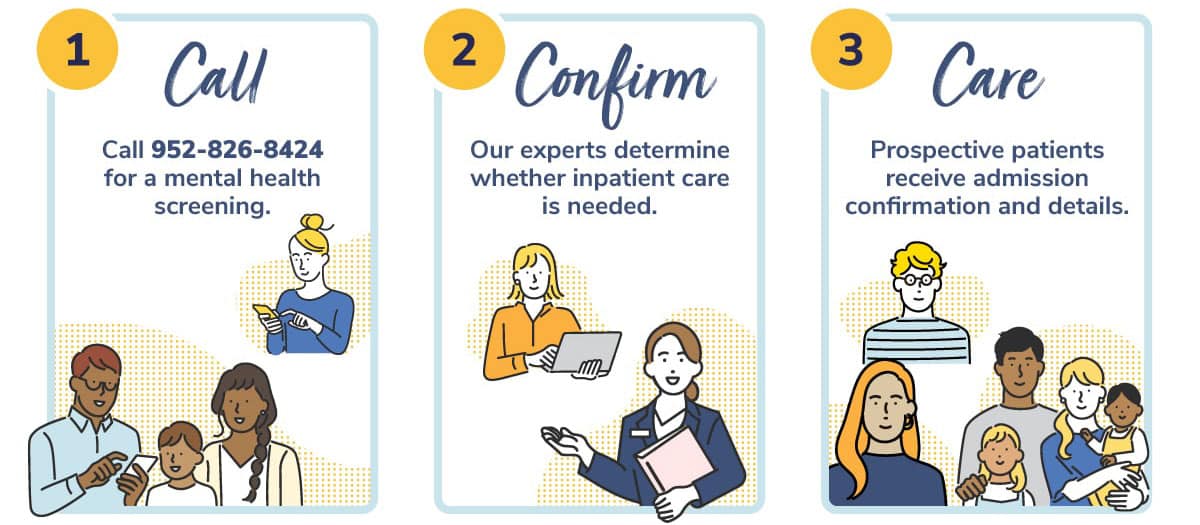
We understand how difficult it can be when you or a loved one is experiencing emergency mental health symptoms. Through our Family First admissions process, you don’t have to wait hours in the ER waiting room—instead, parents and patients over 18 can call our team at 952-826-8424 to start immediate treatment at our hospital for anyone 35 and younger.
Our Inpatient Hospitalization Program in Brooklyn Park is a 24/7 care setting with full-day treatment. The hospital is a safe and healing space for young people to recover from acute safety concerns and severe mental health symptoms.
The Family First Admissions Process works in the following steps:
How to Find the Right Treatment for Teen and Young Adult Mental Health
In summary, seeking treatment before a breakdown or serious mental health episode increases the likelihood of a quick recovery for teenagers and young adults. Early intervention can reduce the quantity and severity of future mental health episodes and support a young person’s brain function and development at this crucial time in their lives.
Parents can connect their child to professional support by requesting a no-cost mental health screening using the form below. Within one business day, a specialist from our team will contact you to complete the screening and determine the best treatment for your child’s needs.
About PrairieCare
At PrairieCare, we believe that mental illness is real, common, and treatable. We provide individuals of all ages with the psychiatric care they truly need. PrairieCare is one of the nation’s largest providers of premier psychiatric services to the Twin Cities metro area, Rochester, and Mankato. Our programs and services span the full continuum of care, with the understanding that each patient has unique experiences, life stages, and needs.
Learn more about PrairieCare’s full continuum of mental health services.
Sources:
- Int J Ment Health Syst. 2020; 14: 23.
- PNAS. 2020 Feb;117(6):3248–3253.