


In 2021, the National Institute of Mental Health reported Major Depressive Disorder (MDD) as one of the most common mental health disorders in the United States. An estimated 21 million adults have had at least one depressive episode, representing about 8.3% of all U.S. adults. The prevalence of depression is higher among women, people between the ages of 18-25, and people who are of two or more races.
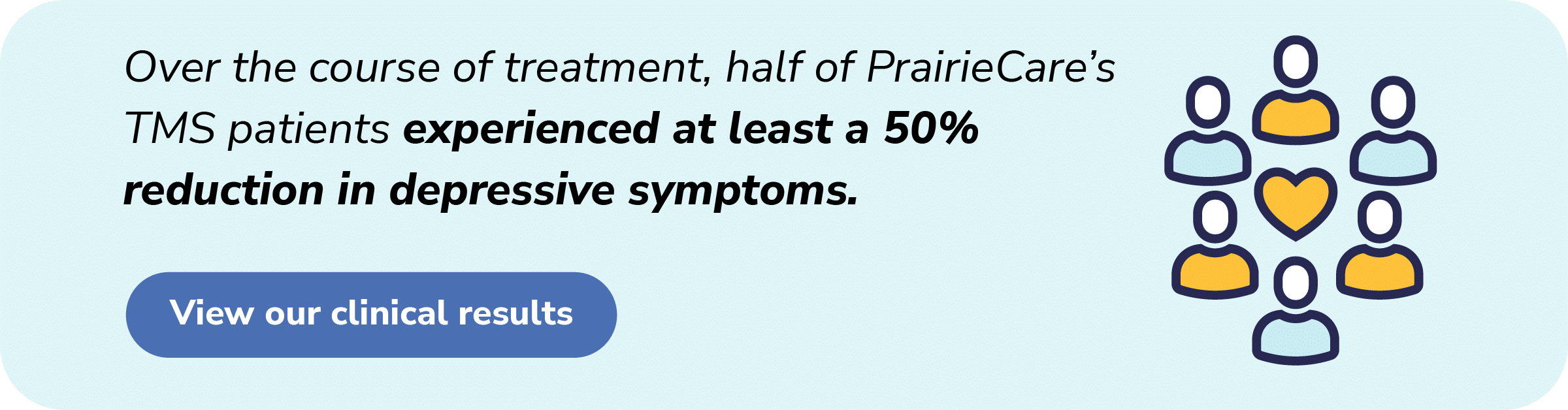
Cleveland Clinic reports that 30% of people with MDD cannot manage their depressive episodes through conventional methods such as medication and psychotherapy. Transcranial Magnetic Stimulation (TMS) is an option available to treat depression at PrairieCare, and we have seen impressive results for people living with treatment-resistant depression. Our clinical TMS results have shown 60% of patients have their symptoms reduced by half and 40% achieve symptom remission.
What is TMS Therapy?
Transcranial Magnetic Stimulation is an innovative therapy option for people with severe, recurrent, and treatment-resistant depression. TMS therapy works to alleviate the symptoms of depression at their source. Delivered via a BrainsWay helmet, TMS therapy produces magnetic pulses that increase activity in the brain’s prefrontal cortex.
To qualify for TMS treatment at PrairieCare, potential patients must have previously tried four medications and a sufficient course of evidence-based psychotherapy. When a patient tries conventional depression treatment without improvement, it is what we call treatment-resistant depression. However, with TMS, patients may feel relief from their symptoms, not rely on medication, and experience hope for the first time. TMS may be the opportunity to dramatically improve someone’s quality of life.
Ready to take the first step in receiving TMS therapy? You can call our TMS team at 952-737-4510 or you can request a no-cost screening using our form.
10 Benefits of TMS therapy at PrairieCare
#1 Reduced Risk of Side Effects
Medication typically used for depression can have an extensive list of possible side effects. With TMS, individuals can avoid the common side effects of antidepressants, such as nausea, appetite changes, fatigue, insomnia, GI issues, and more. TMS can relieve depression symptoms without jeopardizing other regions and functions of the body.
#2 TMS Does Not Interfere with Driving or Work
A significant benefit to TMS therapy is the patient’s ability to drive independently after the appointment and continue their normal daily activities. Unlike other therapy methods for treatment-resistant depression, it does not require anesthesia like Electroconvulsive therapy (ECT), which requires assistance and monitoring from a loved one after treatment; or Ketamine therapy, which can cause dizziness, blurred vision, and other symptoms that make driving unsafe. A TMS session only takes 20 minutes from a patient’s day; after the session, they can continue other essential parts of their day, such as working and caring for their family.
#3 It is FDA Approved
Research on Transcranial Magnetic Stimulation has demonstrated that the effectiveness of the therapy outweighs the risk a patient may experience, leading to the first FDA-approved TMS machine in 2008. It is also a non-invasive therapy, which means it does not involve surgery or anesthesia, leading to faster improvements with zero recovery time needed.
#4 Low Risk of Serious Side Effects
The most serious risk of TMS is a seizure, with an exceedingly low probability of less than 1%. PrairieCare’s TMS clinics follow the latest safety guidelines to minimize any chances of adverse effects associated with TMS. Our team will review with patients any criteria that may put them at a higher risk of adverse side effects and create a plan that is safe and well-informed.
#5 It Can Offer Improvement Even When Other Treatments Do Not
TMS is an effective form of therapy for people with severe, recurrent, and treatment-resistant depression. In a TMS study conducted in 2023, nealy 60% of patients experienced remission and 74% experienced improvement in symptoms. On average, patients start to feel symptom reduction and a response to therapy around 16 sessions. The success of the therapy can be associated with the focused pulsating magnetic fields on the dorsolateral prefrontal cortex, which is responsible for controlling mood.
#6 Patients May Not Need Medication After Treatment
Although it is safe to continue taking antidepressants during TMS therapy, patients may not need the support of medication after treatment. A study has shown that SSRI medications, a common medication class for depression, have a remission rate of about 20-39%, while TMS has a 40% remission rate based on our clinical results. The possibility of significant symptom reduction and remission from depression allows a patient to consider eliminating antidepressants and the negative side effects that can come along with them. Our psychiatrists assess symptom improvement to advise on medication use during and after the completion of TMS therapy.
#7 Our TMS Providers are Top Doctors in Minnesota
Our two TMS providers have been awarded the honor of top doctors in Minnesota multiple times by their colleagues.
- Brent Nelson, MD, the Chief Medical Information Officer and Adult Interventional Psychiatrist, is our provider in Edina. He has focused on brain stimulation and neuromodulation in his education, research, and clinical experience.
- Sandra Quinn, MD, an Adult Interventional Psychiatrist, is the attending physician for adult PHP (Partial Hospitalization Program) and a TMS provider in Woodbury. She practices various techniques for managing depression through our intensive full-week programming in PHP and neuromodulation.
Their expertise in TMS for depression provides life-changing results for patients every day.
#8 It Is Not Painful and There’s No Recovery Time
Patients can experience mild and limited site discomfort on their scalp with mild headaches during the initial sessions. After the first two weeks there is little to no pain associated with each treatment session. In a study of TMS patients, only 4.5% of people needed to end therapy because of the pain associated with the treatment. At PrairieCare, our treatment team accompanies patients throughout the therapy session to provide comfort, support, and maximize treatment outcomes.
#9 TMS Sessions Take Less Time than a Lunch Break
With 20-minute sessions, patients can stick to their treatment plan without taking up a significant amount of time in their day. For patients to have the best outcomes, consistent sessions and adhering to the treatment plan are vital. The short sessions enable people to manage their normal daily activities while getting the help they need.
#10 Our Clinics are Designed for Healing
Our clinics and locations across Minnesota are designed to be welcoming, comforting, and a space to focus on mental well-being. Our TMS treatment rooms have natural lighting, privacy, and comfort. We also provide headphones, a tablet, earplugs, and comfortable seating to bring relaxation to each appointment. Your care team stays with you throughout the therapy session to provide support and answer any questions during treatment.
Start Healing with TMS at PrairieCare
At PrairieCare, mental health care is our mission. We provide a full continuum of psychiatric care to meet our patients where they are in their mental health journey. TMS is a vital part of our programming that provides patients with an alternative therapy option when depression symptoms persist.
To be eligible for Transcranial Magnetic Stimulation at PrairieCare, patients must have all the following qualifications:
- Are 18 years or older
- Have a diagnosis of Major Depressive Disorder (MDD) that is recurrent and severe
- Have completed a sufficient course of evidence-based psychotherapy
- Have tried four medications from two different classes without improvement, including augmentation trials
- Were referred by a primary psychiatrist
Learn more about Transcranial Magnetic Stimulation.
Interested in TMS Treatment? Contact Our Team.
We understand you may have questions before taking the first step toward TMS therapy. Our team offers a free consultation with our experienced care team. You can call us or request a screening using our form.
- Call for TMS Consultation: 952-737-4510
- No Cost Mental Health Screen: 952-826-8475
PrairieCare’s Minnesota TMS Locations
We offer convenient locations for Transcranial Magnetic Stimulation in Edina and Woodbury. Patients in TMS therapy will meet with their treatment team and a psychiatrist regularly. Each site has a dedicated psychiatrist who will oversee the treatment plan.
About PrairieCare
At PrairieCare, we believe that mental illness is real, common, and treatable. We provide individuals of all ages with the psychiatric care they truly need. PrairieCare is one of the nation’s largest providers of premier psychiatric services to the Twin Cities metro area, Rochester, and Mankato. Our programs and services span the full continuum of care, knowing that each patient has their own unique experiences, life stages, and set of needs.
Whether a patient needs perinatal psychiatric care or manages anxiety in school, our clinicians are accredited and trained to help. We support patients during their time with us and create sustainable outcomes for them to reach their goals.